We will cover desk and furniture choices, lighting, colour psychology, storage, ergonomics, small-space layouts, budget hacks, DIY projects, study area ideas by age group, and the most common mistakes people make when setting up a study corner with clear fixes for each one.
📋 Table of Contents
- 1. Why Your Home Study Area Design Actually Affects How You Focus
- 2. Three Questions to Ask Before You Set Up a Study Area
- 3. Choosing the Right Location for Your Home Study Area
- 4. Home Study Area Ideas for Small Spaces & Bedrooms
- 5. Study Desk & Furniture Ideas
- 6. Lighting Ideas for a Home Study Area
- 7. Colour Scheme & Wall Decoration Ideas for Study Rooms
- 8. Storage & Organization Ideas for a Clutter-Free Study Corner
- 9. Ergonomics: Setting Up a Healthy, Pain-Free Study Space
- 10. Budget-Friendly Study Area Decoration Ideas (Under $50)
- 11. 2026 Home Study Area Trends You Need to Know
- 12. DIY Study Area Decoration Projects for This Weekend
- 13. Study Area Ideas by Age: Kids, Teens, College Students & WFH Adults
- 14. Common Study Area Mistakes and How to Fix Them
- 15. Study Area Style Comparison Table
- 16. Key Takeaways
- Conclusion for Home Study Area Ideas
- Frequently Asked Questions About Home Study Area Ideas
1. Why Your Home Study Area Design Actually Affects How You Focus
Here is something most people never think about: the space you study in is either helping your brain concentrate or quietly working against it, every single time you sit down.
Environmental psychology consistently points to the same pattern clutter, poor lighting, uncomfortable seating, and background noise all raise low-level stress and pull attention away from the task in front of you. A dedicated home study area, even a small one, signals to your brain “this is where I focus,” which makes it easier to switch into study mode and harder to get distracted by everything else happening in the house.
This is also why a study corner set up at the dining table rarely works long-term. Your brain associates that spot with eating, phone scrolling, and family conversation not concentration. A dedicated study area design, even if it is just a desk in the corner of a bedroom, creates a mental boundary between “study time” and “everything else time.”
📊 Why It Matters: Students and remote workers who use a consistent, distraction-free study space typically report better focus and fewer interruptions than those who study in shared, multi-purpose areas of the home. A well-designed home study room is not a luxury it is a genuine productivity tool.
2. Three Questions to Ask Before You Set Up a Study Area
Before you buy a desk, paint a wall, or rearrange a single shelf, take five minutes to answer these three questions. They will save you time, money, and a study area that looks nice but does not actually work.
Question 1: Who is actually going to use this study space?
A study area for a young child needs bright colours, low shelving, and space to spread out craft supplies. A study room for a college student needs strong task lighting, fast internet access, and room for a laptop plus textbooks. A work-from-home professional needs a quiet, closed-door setup with video-call-ready lighting. Design for the real user, not a generic “study room” template.
Question 2: What is my honest budget and available space?
You do not need a spare room to build a great home study area. A study nook under the stairs, a corner of a bedroom, or even a wall-mounted fold-down desk in a hallway can work brilliantly. Be honest about your square footage and your budget before you start shopping it will guide every decision that follows.
Question 3: What tasks actually happen at this desk?
Reading, typing, drawing, video calls, and craft projects all need slightly different setups. List the top three activities that will happen at your study desk, and design around those not around what looks good in a photo.
💡 Quick Tip: Sit in your intended study spot for five minutes at the time of day you usually study. Notice the light, the noise, and the temperature. This quick test reveals problems (glare, noise, draughts) before you spend a single dollar.
3. Choosing the Right Location for Your Home Study Area
Not every home has a spare room, and that is completely fine. Some of the best home study area ideas come from finding an underused corner and giving it a clear purpose.
- Bedroom corner: The most common choice quiet, private, and usually has an existing power outlet nearby.
- Under-the-stairs nook: An often-wasted space that fits a compact desk perfectly and creates a cosy, enclosed feel.
- Closet conversion: Remove the closet doors (or the whole closet), add a small desk and shelving instantly a private “cloffice” study area.
- Hallway alcove: A slim, wall-mounted fold-down desk works well in narrow hallways with good natural light.
- Spare bedroom or dedicated study room: The most flexible option if space allows, ideal for a full home study room design with a proper desk, bookshelf, and reading chair.
- Living room zone: A bookshelf or room divider can visually separate a study corner from the rest of an open-plan living space.
Whichever location you choose, prioritise access to natural light and a power outlet these two factors alone determine how comfortable the space will be to use every day.
4. Home Study Area Ideas for Small Spaces & Bedrooms
Small-space study areas need a slightly different mindset than a full home office. The goal is not to hide the fact that the space is small it is to make it feel intentional, calm, and fully functional.
Use a Floating or Wall-Mounted Desk
A floating desk mounted directly to the wall eliminates the need for legs or a bulky frame, freeing up floor space underneath for storage bins or a small chair to be tucked away when not in use. This is one of the single best small study area ideas for a bedroom corner.
Go Vertical With Storage
When floor space is limited, the wall above the desk becomes valuable real estate. Floating shelves, a pegboard organiser, or a wall-mounted corkboard keep books, supplies, and notes off the desktop and within easy reach.
Choose a Compact Corner Desk
An L-shaped or corner desk makes use of an awkward, otherwise wasted corner of a bedroom and often provides more usable surface area than a standard rectangular desk in the same footprint.
Fold-Down and Murphy Desks
For truly tiny rooms, a wall-mounted fold-down desk (sometimes called a Murphy desk) can be folded flat against the wall when not in use, freeing the room completely for other activities.
Use a Room Divider or Curtain
If the study area shares a bedroom with a sleeping space, a slim bookshelf, folding screen, or simple curtain can create a visual and mental separation between “study zone” and “rest zone” without any construction work.
5. Study Desk & Furniture Ideas
The desk is the anchor of any home study area, and getting it right matters more than any decorative touch you add afterward.
Desk Size and Shape
A desk that is too small forces cramped posture and constant clutter; a desk that is too large can overwhelm a small room. As a general guide, aim for at least 100–120 cm of desk width for a single laptop-and-notebook setup, and closer to 140–160 cm if you need a monitor, printer, or extra workspace.
Study Chair: Do Not Skip This
A dining chair or bed-edge seating might look fine in a photo, but hours of study in an unsupportive chair leads to real discomfort and a shorter attention span. An adjustable chair with lumbar support is one of the few study room purchases genuinely worth spending more on.
Bookshelves and Open Shelving
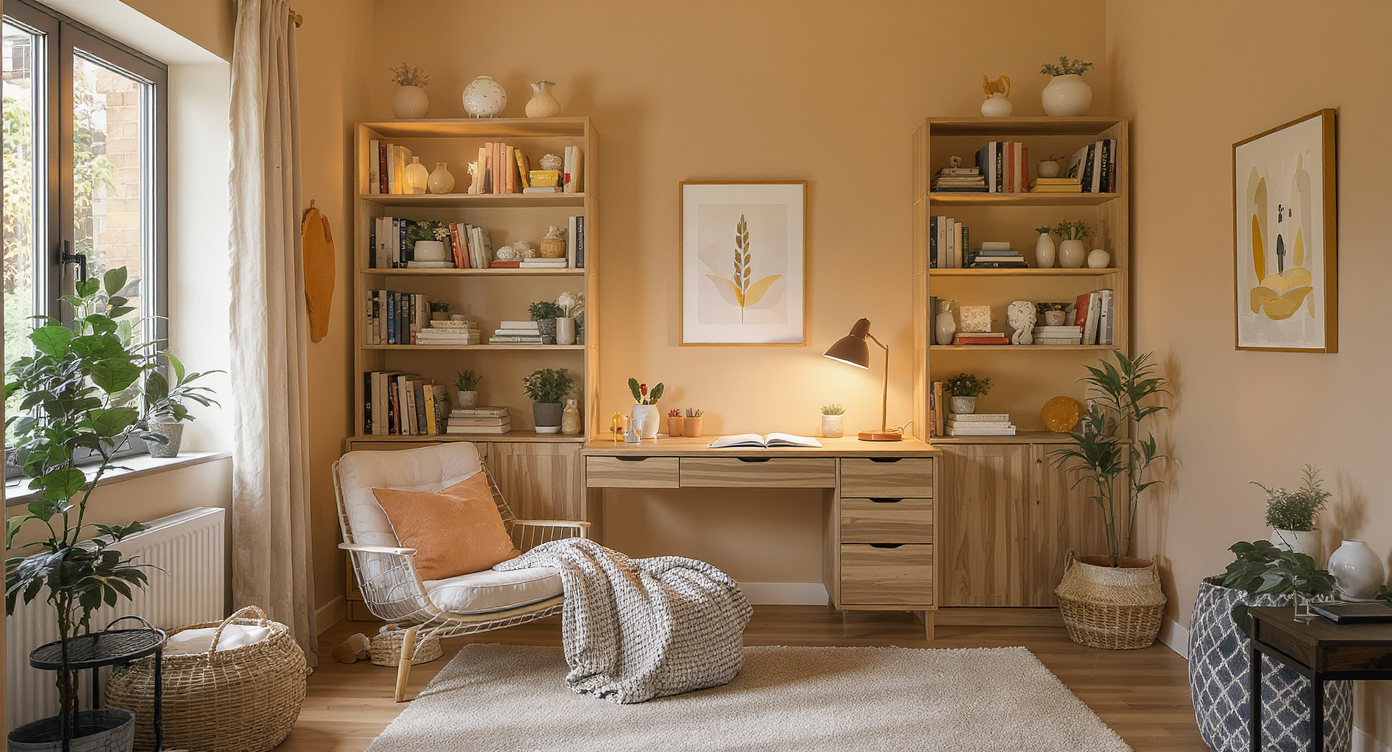
Open shelving above or beside the desk keeps frequently used books and supplies visible and accessible, while also functioning as a decorative element when styled thoughtfully with a mix of books, small plants, and a few personal objects.
Study Table Decoration Ideas
- A desk organiser tray for pens, sticky notes, and small supplies
- A small potted plant or succulent for a natural, calming touch
- A cork or magnetic board above the desk for a rotating schedule and reminders
- A desk lamp with a warm-toned bulb as both function and décor
- A woven basket or fabric bin underneath for loose cables and chargers
6. Lighting Ideas for a Home Study Area
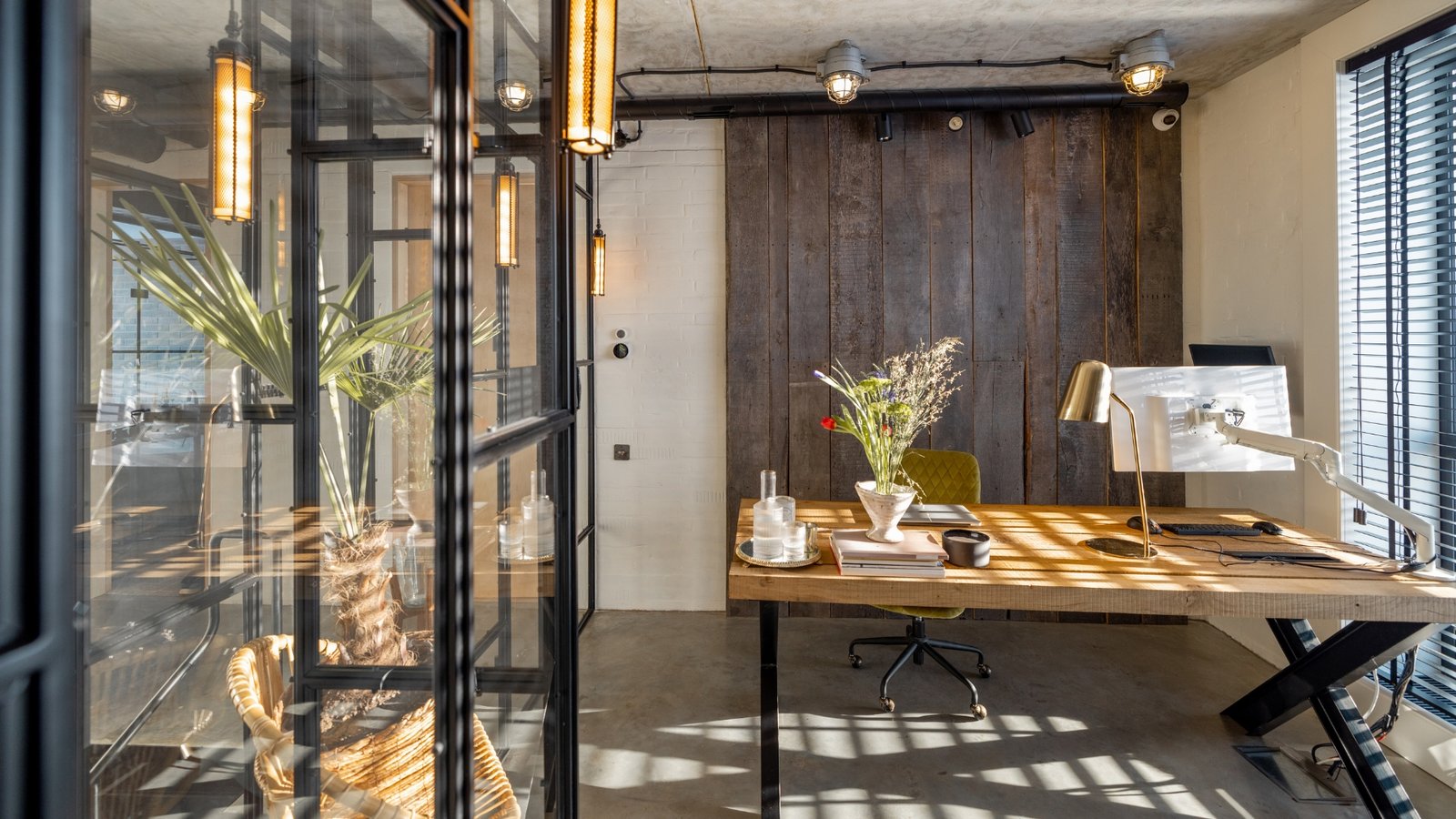
If there is one factor that separates a study area that actually helps you focus from one that gives you a headache after twenty minutes, it is lighting.
Position the Desk Near a Window
Natural light reduces eye strain and supports alertness far better than artificial light alone. Position the desk so light comes from the side rather than directly behind or in front of the screen, which prevents glare on both the monitor and the eyes.
Add a Dedicated Task Lamp
A single overhead ceiling light creates flat, harsh lighting that makes reading small text tiring. An adjustable desk lamp, positioned to light the work surface directly, is one of the most impactful and inexpensive upgrades any study area can get.
Choose the Right Colour Temperature
Cooler, whiter light (around 4000–5000K) tends to support alertness and focus during daytime study sessions, while warmer light (around 2700–3000K) is gentler on the eyes for evening reading. Many modern desk lamps let you adjust between the two.
Layer in Ambient Lighting
Combine the task lamp with a softer ambient source a floor lamp, string lights, or a small accent light so the room does not feel like a stark, single-source workspace once the sun goes down.
7. Colour Scheme & Wall Decoration Ideas for Study Rooms
Colour has a measurable effect on mood and concentration, which makes it one of the most important and most overlooked decisions in study room decoration.
Best Colours for Focus and Calm
- Soft blue: Associated with calm and mental clarity, a popular choice for study room walls
- Sage or muted green: Evokes nature and reduces visual fatigue during long study sessions
- Warm white or soft beige: A safe, versatile neutral that reflects light well and keeps small rooms feeling open
- Soft yellow: Energising in small doses best used as an accent rather than a full wall colour
Wall Decoration Ideas for a Study Area
- A large corkboard or magnetic whiteboard for goals, schedules, and reminders
- A gallery of motivational prints or a world map for a study room with an educational feel
- Floating shelves styled with books, small plants, and a few framed photos
- A large calendar or planner mounted at eye level above the desk
- Removable wallpaper on a single accent wall for personality without commitment
💡 Quick Tip: Avoid highly saturated, busy patterns directly in the eyeline of the desk they can be visually distracting during long study sessions. Save bold pattern and colour for areas just outside the direct line of sight.
8. Storage & Organization Ideas for a Clutter-Free Study Corner
A cluttered desk creates the same low-level mental noise as a cluttered room and in a small study area, clutter is even more visible and distracting.
Desktop Organisers
Trays, pen cups, and small drawer organisers keep frequently used items accessible without spreading across the whole desk surface.
Under-Desk Storage
Rolling drawer units or fabric storage bins that slide under the desk make use of otherwise wasted space and keep supplies close but out of sight.
Cable Management
A simple cable clip strip or a woven basket for the power strip keeps charging cables from becoming a tangled, distracting mess on and around the desk.
Wall-Mounted Storage
Pegboards, floating shelves, and hanging file organisers keep the desk surface clear while still keeping supplies within arm’s reach essential in any small home study area idea.
9. Ergonomics: Setting Up a Healthy, Pain-Free Study Space
Ergonomics is not just for office workers a student who studies for hours at a poorly set up desk can end up with the same neck, shoulder, and wrist strain as anyone else.
Desk and Chair Height
Feet should rest flat on the floor (or a footrest), knees roughly level with hips, and forearms parallel to the desk surface when typing. If a chair cannot be adjusted to this position, a cushion or footrest can help correct the alignment.
Screen and Monitor Position
The top of a laptop or monitor screen should sit roughly at eye level, about an arm’s length away. A laptop stand paired with an external keyboard is a low-cost way to fix the “hunched neck” posture that comes from looking down at a low screen for hours.
Take Movement Breaks
Even the best-designed study area cannot fully offset hours of continuous sitting. Short standing or stretching breaks every 45–60 minutes support both focus and physical comfort during long study sessions.
10. Budget-Friendly Study Area Decoration Ideas (Under $50)
Some of the most functional and good-looking study areas are built on a very small budget. The key is prioritising what actually affects comfort and focus, and saving on the rest.
Start With What You Already Own
Before buying anything new, check whether an existing table, chair, or shelf from another room could be repurposed into a study desk. Rearranging and repurposing costs nothing and is always the first step.
Paint Is the Highest-Impact, Lowest-Cost Upgrade
A single accent wall behind the study desk, painted in a calming colour, transforms the feel of the whole corner for the price of a small paint tin.
Thrift and Second-Hand Finds
Desks, chairs, lamps, and shelving units are commonly available second-hand at a fraction of retail price. A light sand and a coat of paint can make an older piece look completely fresh.
DIY Organisers
Mason jars, repurposed tin cans, and simple cardboard box organisers (covered in fabric or paper) can replace expensive desk organiser sets for almost no cost.
Free or Low-Cost Wall Decor
Printable motivational quotes, a hand-drawn calendar, or framed pages from an old book or magazine add personality to a study wall without any real expense.
11. 2026 Home Study Area Trends You Need to Know
Knowing what is trending helps you make choices that feel current — without needing to follow every trend blindly.
Biophilic Study Spaces
Bringing plants, natural wood tones, and views of greenery into the study area continues to grow in popularity, largely because natural elements are widely associated with reduced stress and better sustained attention.
Multi-Functional “Cloffice” Setups
Converting closets and awkward alcoves into compact study nooks nicknamed “cloffices” remains one of the biggest small-space trends, especially in apartments and shared bedrooms.
Warm, Muted Colour Palettes
Soft sage, warm terracotta, and muted blue are replacing stark white and cool grey as the preferred palette for study room walls in 2026, echoing the wider shift toward warmer interiors across home decoration.
Modular and Adjustable Furniture
Height-adjustable desks and modular shelving units that can be reconfigured as needs change are increasingly popular for study rooms shared by children who are growing, or for multi-purpose rooms.
Tech-Integrated Study Nooks
Built-in cable management, wireless charging pads, and dedicated docking stations are becoming standard features in newly designed home study areas, reflecting how much study now happens on laptops and tablets.
12. DIY Study Area Decoration Projects for This Weekend
DIY Corkboard Command Centre
Mount a simple corkboard above the desk and use it for a weekly schedule, reminders, and motivational notes an inexpensive project that keeps the whole study routine visible at a glance.
Mason Jar Desk Organiser
Paint or wrap a few mason jars or tin cans in coordinating paper, then group them on the desk to hold pens, scissors, and small supplies in an organised, decorative way.
Fabric-Covered Storage Bins
Cover plain cardboard boxes with fabric or patterned paper to create matching storage bins for under-desk or shelf storage a simple project that instantly makes open shelving look more intentional.
Upcycled Desk Makeover
An old desk can be sanded lightly and repainted in a fresh colour, with new handles added, to completely change its look for a fraction of the cost of buying new furniture.
DIY Motivational Wall Art
Print or hand-letter a favourite quote, frame it simply, and hang it at eye level near the desk for a personal touch that costs almost nothing.
13. Study Area Ideas by Age: Kids, Teens, College Students & WFH Adults
Study Area Ideas for Young Kids
Bright, cheerful colours, a low table and chair sized to the child, easily accessible storage bins for craft supplies, and a soft rug underfoot for floor-based activities all work well for younger children.
Study Area Ideas for Teens
Teens generally benefit from a study area that reflects their own personality a chosen colour scheme, a corkboard for their own reminders, and enough desk space for both laptop-based schoolwork and physical notebooks.
Study Area Ideas for College Students
Reliable lighting, strong Wi-Fi positioning, a comfortable ergonomic chair for long study sessions, and compact storage for textbooks are the priorities in a dorm room or shared apartment study corner.
Study Area Ideas for Work-From-Home Adults
A closed-door location or clear visual separation from living space, video-call-ready lighting and background, noise control, and a proper ergonomic chair are the top priorities for a home study area that doubles as a home office.
14. Common Study Area Mistakes and How to Fix Them
| The Mistake | Why It Is a Problem | The Fix |
|---|---|---|
| Studying at the bed or sofa | Brain associates the spot with rest, not focus | Set up even a small dedicated desk elsewhere in the room |
| Only one overhead light | Flat lighting causes eye strain during reading | Add an adjustable desk lamp positioned to the side |
| Desk facing a wall with no light | Increases fatigue and reduces alertness | Position desk near a window or main light source |
| No storage plan | Desk clutter builds up and becomes distracting | Add desktop organisers, shelving, and under-desk bins |
| Ignoring chair comfort | Leads to poor posture and shorter focus periods | Invest in one adjustable, supportive chair |
| Too many decorative distractions | Busy visuals compete for attention during study | Keep the direct eyeline calm; save bold decor for the edges |
| No cable management | Tangled cords look messy and are a tripping hazard | Use a cable clip strip or a small basket for the power strip |
| Sharing the space with unrelated clutter | Non-study items on the desk create mental clutter | Reserve the desk surface strictly for study-related items |
15. Study Area Style Comparison Table
| Style | Best For | Key Colours | Key Materials | Budget Level |
|---|---|---|---|---|
| Minimalist Study Nook | Small spaces, deep focus | White, warm beige, soft grey | Wood, linen, glass | Low – Medium |
| Japandi Study Room | Calm, clutter-free work | Warm earth tones | Dark wood, stone, linen | Medium |
| Modern Home Office | WFH professionals | Black, white, bold accent | Metal, glass, leather | Medium – High |
| Cosy Cottage Study | Reading-heavy study, bedrooms | Cream, soft green, wood tones | Reclaimed wood, cotton | Low – Medium |
| Playful Kids’ Study Corner | Young children | Bright, cheerful accents | Painted wood, fabric bins | Low |
✅ Key Takeaways — What to Remember
- A dedicated home study area even a small corner helps your brain switch into focus mode faster than a shared, multi-purpose spot.
- Prioritise natural light and a dedicated task lamp before any decorative purchase.
- An adjustable, supportive chair is one of the few study room items genuinely worth spending more on.
- Vertical storage, floating desks, and fold-down desks are the best home study area ideas for small spaces and bedrooms.
- Soft blue, sage green, and warm neutrals support focus better than stark white or highly saturated colours.
- Keep the direct eyeline calm and clutter-free; save bold decoration for the edges of the space.
- Design the study area around the real person and real tasks that will use it kids, teens, college students, and WFH adults all need different setups.
- Some of the best study area upgrades rearranging furniture, adding a lamp, decluttering cost little to nothing.
Conclusion for Home Study Area Ideas
Building a home study area that actually works does not require a spare room, a big budget, or professional help. It requires a clear sense of who will use the space and for what, a few smart decisions about light, layout, and storage, and the willingness to try one idea at a time and see what genuinely helps you focus.
Start small. Move the desk closer to the window, add a proper task lamp, or clear the clutter off the desktop this weekend. Notice how even one change shifts how easily you settle into study mode. Then build from there, one home study area idea at a time.
A study space that supports real focus is one of the most valuable, low-cost upgrades you can make to any home for students and work-from-home adults alike.
📌 Next Steps: Enjoyed this guide? Explore our related articles on room decoration ideas, home accessories, and home decoration ideas for more practical home improvement inspiration from EzHomeAura.
Frequently Asked Questions About Home Study Area Ideas
What is the best layout for a small home study area?
A floating or wall-mounted desk paired with vertical shelving above it is generally the best layout for a small home study area. This frees up floor space, keeps supplies within reach, and avoids the bulk of a traditional desk with legs and drawers.
How do I set up a study area in a bedroom?
Choose a corner near a window for natural light, add a compact desk and an adjustable chair, and use a bookshelf, curtain, or room divider to visually separate the study zone from the sleeping area. Vertical shelving keeps supplies organised without taking up extra floor space.
What colours are best for a study room?
Soft blue, sage green, and warm neutral tones such as beige or warm white are widely considered the best colours for a study room, as they support calm concentration without being visually distracting. Bright, highly saturated colours are best used sparingly as accents rather than as the main wall colour.
How can I decorate a study table on a budget?
Add a desk organiser tray, a small plant, a corkboard for reminders, and a warm-toned desk lamp. Repurposing jars or tins as pen holders and printing free wall art are both effective ways to decorate a study table for very little money.
What is a “cloffice” and how do I create one?
A cloffice is a closet converted into a compact home office or study nook, usually by removing the closet doors (or the whole closet unit), adding a small desk and shelving, and including a task lamp. It is one of the most space-efficient home study area ideas for apartments and smaller homes.
How much desk space do I need for a home study area?
For a basic laptop-and-notebook setup, aim for at least 100–120 cm of desk width. If you need room for a monitor, printer, or extra workspace, 140–160 cm is a more comfortable target.
Where should a study desk be placed in a room?
Ideally, place the desk near a window so natural light comes from the side rather than directly behind or in front of the screen. This reduces glare and eye strain during long study sessions.
What lighting is best for studying at home?
A combination of natural daylight and an adjustable task lamp is best for studying at home. Cooler, whiter light (around 4000–5000K) tends to support daytime alertness, while warmer light (around 2700–3000K) is gentler for evening study sessions.
How do I make a study area more comfortable for long hours?
Invest in an adjustable, supportive chair, position the screen at eye level, keep feet flat on the floor or a footrest, and take short movement breaks every 45–60 minutes. These ergonomic adjustments matter more for long-term comfort than any decorative choice.
What are good study area ideas for kids versus adults?
Kids generally benefit from bright colours, low furniture sized to their height, and easily accessible storage for craft supplies. Adults, especially those working from home, generally need a quieter, closed-off location, stronger task lighting for video calls, and a more ergonomic chair for extended focus sessions.
EzHomeAura
1 thought on “45+ Smart Home Study Area Ideas You’ll Love in 2026”