Decorative Shelves: A Complete Guide to Stylish and Functional Home Decorate 
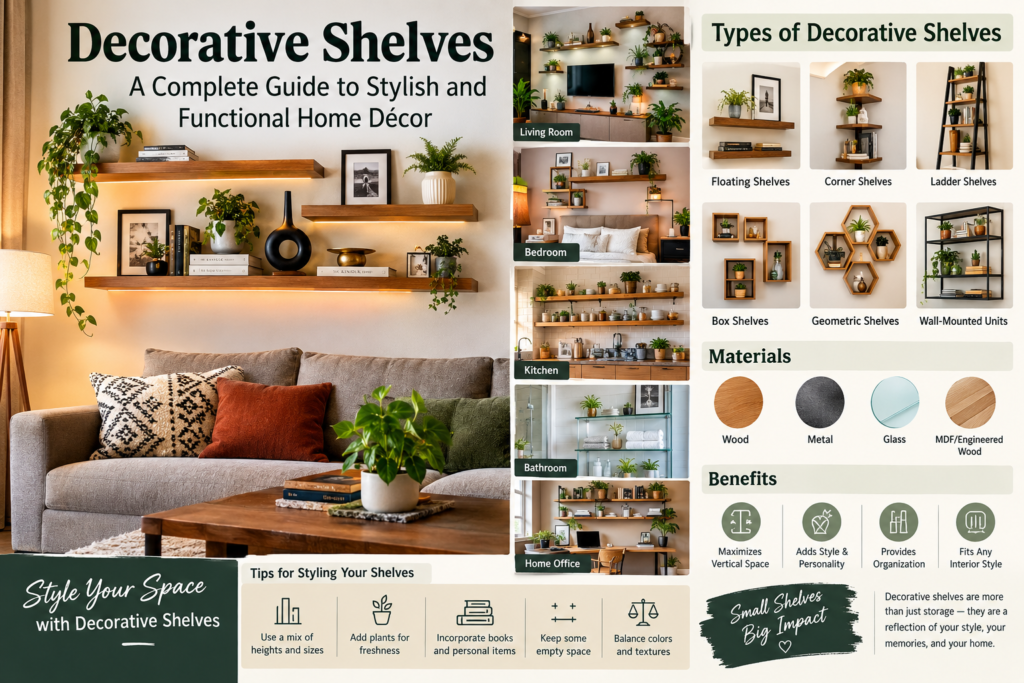
Decorative shelves are an excellent way to combine beauty, organization, and functionality in a home. They can transform an empty wall into an attractive focal point while providing a convenient place to display books, photographs, plants, artwork, ornaments, and other personal belongings. Unlike large cabinets or bulky storage furniture, shelves make use of vertical space and can be installed in almost any room. Whether a home has a modern, minimalist, traditional, rustic, industrial, or luxurious interior, there is a decorative shelf style that can complement the existing design.
Home decoration is not only about choosing expensive furniture or painting walls in attractive colors. Small details can have a significant impact on the overall appearance of a room. Decorative shelves are one of those details. A well-positioned shelf can bring an otherwise empty space to life, introduce color and texture, and provide an opportunity to showcase objects that reflect the personality and interests of the people living in the home.
With many designs and materials available today, decorative shelves have become more than simple storage solutions. They are now important elements of interior design. From floating shelves and corner shelves to ladder shelves and geometric designs, homeowners have countless options to choose from. The key is understanding how different shelf styles work, where they should be placed, and how to decorate them effectively.
What Are Decorative Shelves?
Decorative shelves are shelves designed primarily to display objects and enhance the appearance of an interior space, although they can also provide useful storage. They may be mounted on walls, placed on the floor, or incorporated into larger furniture units. Their main purpose is to create an organized and visually appealing area where decorative or everyday items can be displayed.
Unlike traditional storage shelves that are often designed to hold as many items as possible, decorative shelves focus on presentation. The objects placed on them become part of the room’s overall design. A shelf may hold a collection of books, a beautiful vase, framed photographs, indoor plants, candles, sculptures, or souvenirs from travels.
Decorative shelves can be used in homes of all sizes. In a large home, they can fill empty walls and create attractive display areas. In a small apartment, they can provide storage without occupying valuable floor space. This combination of practicality and style makes them one of the most versatile home accessories.
Why Decorative Shelves Are Important in Home Décor
One of the main reasons decorative shelves are popular is their ability to improve the appearance of a room without requiring major changes. Installing shelves can be much simpler and more affordable than replacing furniture, remodeling a wall, or redesigning an entire room.
Decorative shelves also help homeowners personalize their spaces. A room can look beautiful, but it may still feel impersonal if it does not contain objects that reflect the people who live there. Shelves provide an ideal place for photographs, artwork, favorite books, collectibles, and meaningful souvenirs.
Another important benefit is organization. Clutter can make a room look smaller and less comfortable. By giving items a designated place, shelves can help keep surfaces such as tables, countertops, and floors clear. This creates a cleaner and more organized environment.
Shelves can also improve the visual balance of a room. Empty vertical space can sometimes make walls appear unfinished. A carefully arranged shelf can add height, texture, and dimension. When several shelves are installed at different levels, they can create an attractive visual pattern that draws attention to the wall.
Popular Types of Decorative Shelves
There are many types of decorative shelves available, and each style offers different advantages. Choosing the right type depends on the size of the room, the design style, the intended use, and personal preference.
Floating Shelves
Floating shelves are among the most popular decorative shelf designs. They are mounted directly onto the wall and usually have hidden brackets or supports. This creates a clean appearance because there are no obvious mounting fixtures.
Floating shelves work particularly well in modern and minimalist interiors. They can be installed individually or arranged in groups. A few floating shelves placed above a sofa, desk, bed, or television can create an attractive display area.
They are also useful in small rooms because they do not take up floor space. Homeowners can use them to display books, small plants, framed photographs, candles, and decorative objects.
Corner Shelves
Corner shelves are designed to fit into the corners of rooms. Corners are often unused areas, so these shelves provide an excellent way to maximize available space.
They are particularly useful in bedrooms, living rooms, bathrooms, and kitchens. Small corner shelves can hold plants, ornaments, toiletries, or other small objects. Larger corner shelving units can provide more substantial storage.
Ladder Shelves
Ladder shelves are freestanding units designed to resemble a ladder. They typically have several shelves that become narrower toward the top.
This design adds a sense of height to a room and can create a stylish focal point. Ladder shelves are suitable for living rooms, bedrooms, offices, and hallways. They can display books, plants, decorative baskets, framed photographs, and ornaments.
Box Shelves
Box shelves have enclosed sides and sometimes resemble square or rectangular frames. They can be arranged individually or grouped together to create a geometric display.
These shelves are especially suitable for modern interiors. Different-sized box shelves can be combined to create an interesting wall arrangement.
Geometric Shelves
Geometric shelves come in shapes such as hexagons, circles, triangles, and other creative designs. They are often used as decorative features rather than traditional storage.
These shelves can add personality and artistic character to a room. They are particularly effective in contemporary homes where unusual shapes and creative arrangements are part of the design.
Wall-Mounted Shelving Units
Wall-mounted shelving units may contain multiple shelves connected by a frame. They can provide significant storage while maintaining a decorative appearance.
These units are useful in living rooms, home offices, kitchens, and bedrooms. They can be used for books, electronics, decorative items, and organizational containers.
Materials Used for Decorative Shelves
The material used to make a shelf affects its appearance, durability, weight, and maintenance requirements.
Wooden Shelves
Wood is one of the most traditional and popular materials for shelves. Wooden shelves can create warmth and natural character in a room. They are available in different colors and finishes, from light natural wood to dark polished surfaces.
Wooden shelves work well with rustic, farmhouse, traditional, Scandinavian, and contemporary interiors. They can also be painted to match a particular color scheme.
Metal Shelves
Metal shelves are often associated with industrial and modern interior designs. They can feature simple frames, geometric structures, or decorative details.
Metal is generally durable and can support a significant amount of weight when properly installed. Black, white, silver, gold, and other finishes are commonly used to create different visual effects.
Glass Shelves
Glass shelves offer a sophisticated and lightweight appearance. Because glass is transparent, it can make a room feel more open and less visually crowded.
Glass shelves are commonly used for decorative objects, perfumes, collectibles, and bathroom accessories. They require regular cleaning because fingerprints and dust can be easily visible.
MDF and Engineered Wood
Medium-density fiberboard and other engineered wood products are commonly used for affordable decorative shelves. They can be manufactured in many shapes, colors, and finishes.
These shelves are useful for homeowners who want the appearance of wood while maintaining a more affordable price. However, the quality and weight capacity can vary, so it is important to choose a product appropriate for its intended use.
Decorative Shelves in the Living Room
The living room is one of the most popular places to install decorative shelves. Because it is often a central area of the home, shelves can help create a strong visual impression.
Shelves can be placed above a sofa, beside a television, around an entertainment unit, or on an empty wall. They can display books, photographs, plants, artwork, candles, vases, and decorative sculptures.
When decorating living room shelves, it is useful to create balance. Instead of putting objects of the same size next to each other, combine tall, medium, and small pieces. For example, a tall vase can be placed beside a horizontal stack of books and a small decorative object.
Another approach is to create a theme. A nature-inspired display could include plants, wooden objects, and natural-colored decorations. A modern display might use black, white, metallic, and glass objects.
Decorative Shelves in the Bedroom
Bedrooms can also benefit from decorative shelves. Shelves can be installed above a desk, beside the bed, above a dresser, or on an empty wall.
Bedroom shelves can hold books, photographs, small plants, candles, perfumes, artwork, and personal keepsakes. Floating shelves beside the bed can even serve as an alternative to a traditional bedside table.
When decorating bedroom shelves, it is generally best to avoid excessive clutter. The bedroom should feel calm and relaxing, so a simple arrangement of meaningful and attractive objects can work better than a crowded display.
Decorative Shelves in the Kitchen
Shelves are highly practical in kitchens. Open shelving can provide easy access to frequently used items while also contributing to the room’s appearance.
Kitchen shelves can hold plates, cups, bowls, jars, spices, cookbooks, utensils, and decorative containers. Wooden shelves can create a warm, traditional atmosphere, while metal shelves can provide a modern industrial look.
However, kitchen shelves require regular cleaning because they can collect dust, grease, and food particles. Items placed on open shelves should therefore be easy to clean and suitable for the kitchen environment.
Decorative Shelves in the Bathroom
Bathrooms often have limited storage space, making shelves particularly useful. Wall-mounted shelves can hold towels, soaps, toiletries, candles, plants, and decorative containers.
Glass and moisture-resistant materials are often suitable for bathroom shelves. Wooden shelves can also be used when they have been properly treated or finished to withstand moisture.
Small shelves can be installed beside mirrors or above sinks, while larger units can provide additional storage near showers or bathtubs.
Decorative Shelves in the Home Office
A home office should be organized and functional, but it can also be attractive. Decorative shelves can provide storage for books, stationery, documents, plants, awards, and decorative items.
Shelves installed above or beside a desk can help keep the workspace organized. Books can be arranged vertically or stacked horizontally, while small plants and artwork can add personality.
An organized shelving system can also make it easier to find important items, reducing distractions and creating a more productive working environment.
How to Style Decorative Shelves
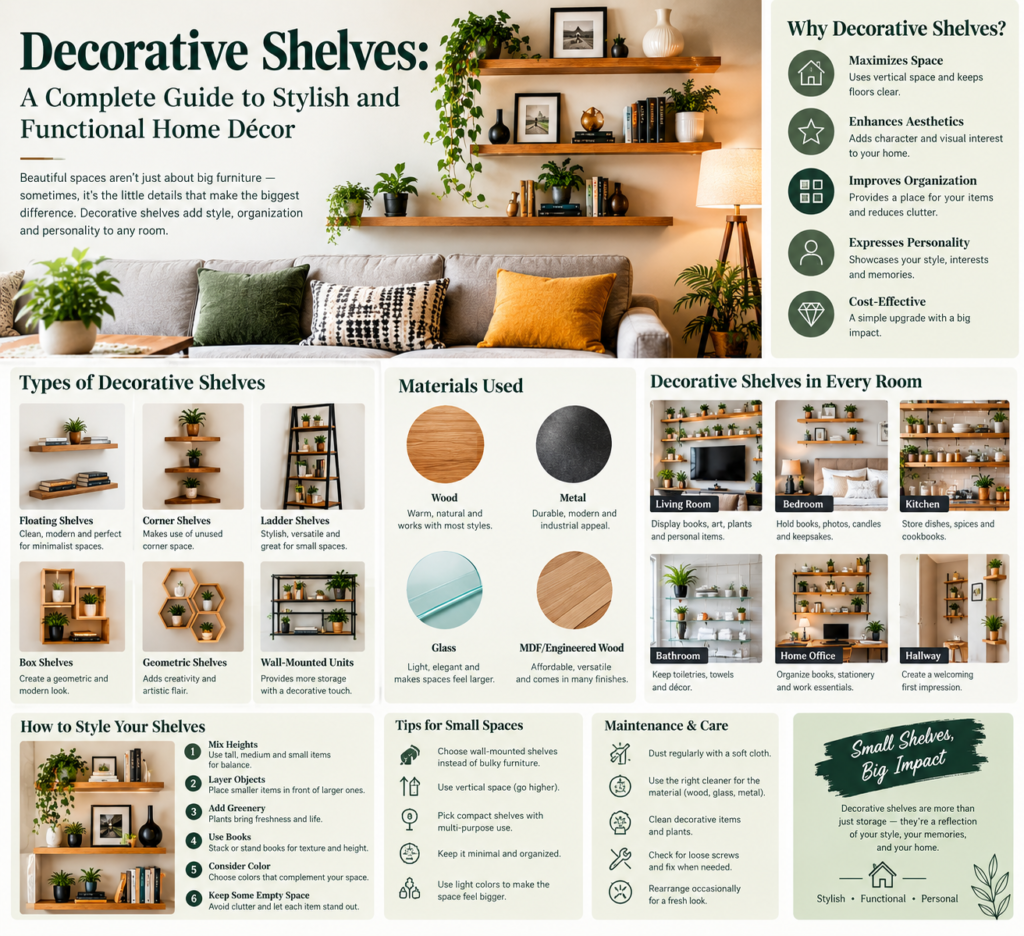
Styling shelves successfully requires more than simply placing objects wherever there is space. Good shelf styling involves balance, proportion, color, texture, and spacing.
One useful technique is to vary the height of objects. A tall vase, medium-sized frame, and small ornament can create a visually interesting arrangement.
Another technique is layering. Instead of placing every item at the same depth, smaller objects can be positioned in front of larger pieces. A framed photograph can stand behind a small plant or decorative object, for example.
Books are also useful for styling. They can be arranged vertically or placed horizontally in small stacks. A decorative object can then be placed on top of a stack to create additional height.
Plants can add natural color and texture. Small plants can be placed between books and decorative objects, while trailing plants can hang over the edge of a shelf.
Using Color Effectively
Color is an important part of shelf decoration. The objects on a shelf should generally complement the colors already present in the room.
A neutral room can benefit from colorful decorative objects that create contrast. In a room that already contains many strong colors, neutral accessories may create a calmer appearance.
A simple color palette can also make shelves look more sophisticated. For example, combining white, beige, natural wood, and green can create a relaxed appearance. Black, white, and metallic accessories can create a modern look.
The goal is not necessarily to make every object the same color. Instead, colors should work together to create visual harmony.
Creating Balance on Shelves
Balance is one of the most important principles of interior decoration. A shelf can look unattractive if all heavy or large objects are placed on one side.
Instead, distribute visual weight across the shelf. If one side contains a large vase, the other side might contain a stack of books or several smaller objects.
Symmetry can also be effective. Two similar objects placed on opposite sides of a shelf can create a formal appearance. However, perfect symmetry is not always necessary. Asymmetrical arrangements can feel more relaxed and contemporary.
Decorative Shelves and Small Spaces
Decorative shelves are particularly useful in small homes and apartments because they take advantage of vertical space.
Instead of placing additional cabinets on the floor, homeowners can install wall-mounted shelves. This leaves more floor space available and can make a room feel larger.
In small bedrooms, shelves can replace bulky bedside tables. In kitchens, shelves can supplement cabinets. In bathrooms, they can provide storage without requiring a large vanity.
The key is to avoid overcrowding. Too many shelves or too many objects can make a small room feel busy. A few carefully selected shelves can provide the right balance.
Choosing the Right Shelf Size
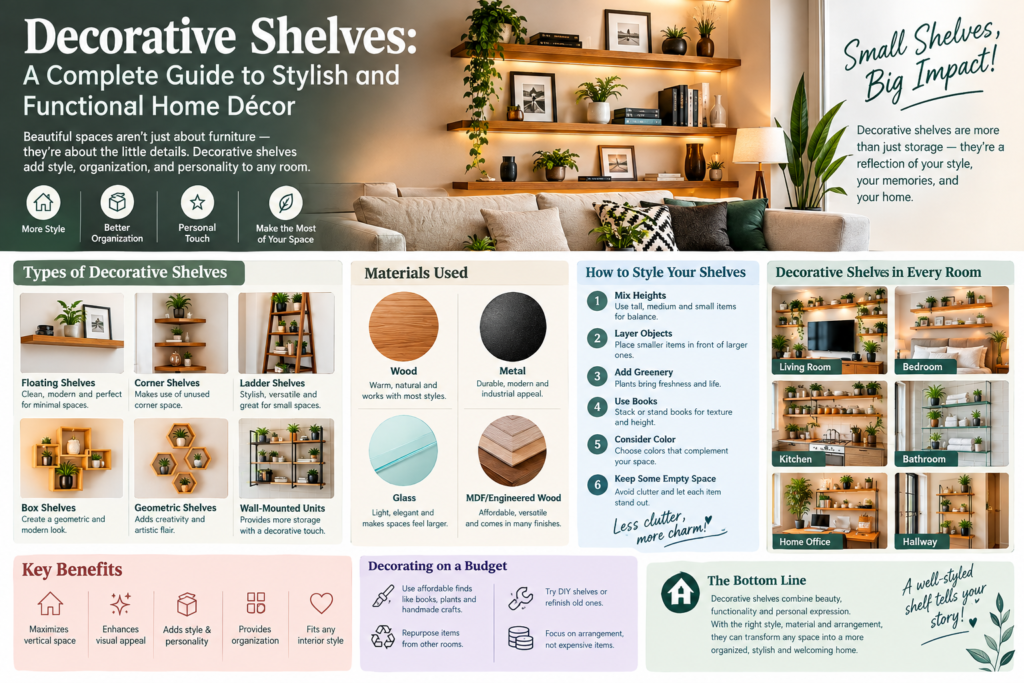
Shelf size should be appropriate for the wall and the room. A very large shelf on a small wall may overwhelm the space, while a tiny shelf on a large empty wall may look insignificant.
Before purchasing a shelf, measure the available area carefully. Consider the width, depth, and height of the shelf. Also think about the objects that will be displayed.
Depth is particularly important. Decorative shelves do not always need to be very deep, especially if they will only hold small objects and photographs. Deeper shelves are more suitable for books, larger plants, and substantial decorative items.
Installation and Safety
Proper installation is essential for decorative shelves. A shelf that is poorly mounted can become unstable or fall, potentially damaging belongings or causing injury.
The mounting system should be appropriate for the type of wall. Different walls may require different anchors and screws. The weight capacity of the shelf and its mounting hardware should also be considered.
Heavy objects should not be placed on shelves that are designed only for lightweight decorations. Shelves installed in homes with children or pets should be positioned carefully, and fragile or hazardous objects should be kept out of easy reach.
Maintaining Decorative Shelves
Regular maintenance keeps shelves looking attractive and extends their lifespan. Dust can accumulate quickly, especially on open shelves, so they should be cleaned regularly.
Wooden shelves can usually be cleaned with a soft cloth and appropriate wood-safe cleaning products. Glass shelves can be cleaned with glass cleaner and a lint-free cloth. Metal shelves may require different cleaning methods depending on their finish.
The decorative objects themselves should also be cleaned. Plants, picture frames, ornaments, and books can collect dust over time.
It is also a good idea to occasionally reorganize shelves. Changing the arrangement can refresh the appearance of a room without requiring new furniture or decorations.
Decorating Shelves on a Budget
Decorating a home does not have to be expensive. Affordable objects can look attractive when they are arranged thoughtfully.
Books, photographs, handmade crafts, small plants, recycled containers, and existing household objects can all be used as shelf decorations. Instead of purchasing many new accessories, homeowners can rotate items from different rooms.
DIY shelves are another option for people who enjoy creative projects. Simple wooden boards, brackets, and appropriate mounting hardware can be used to create customized shelves.
Painting or refinishing an old shelf can also give it a completely new appearance. A shelf that no longer matches the room can be repainted or stained rather than replaced.
Choosing Shelves for Different Interior Styles
Different interior styles call for different types of shelves.
For a minimalist home, simple floating shelves with a small number of carefully selected objects can work well.
For a rustic home, wooden shelves with natural finishes can complement other natural materials.
For an industrial interior, metal shelving combined with wood can create the desired aesthetic.
For a traditional home, detailed wooden shelving and classic decorative objects can provide an elegant appearance.
For a contemporary home, geometric shelves, glass shelves, and unusual designs can add visual interest.
The most important thing is to choose shelves that complement the furniture, wall colors, flooring, lighting, and other accessories in the room.
Decorative Shelves as a Form of Personal Expression
One of the most enjoyable aspects of decorative shelves is the opportunity for personal expression. Shelves can tell visitors something about the people who live in a home.
Favorite books can reveal interests and hobbies. Family photographs can highlight important relationships and memories. Travel souvenirs can represent memorable experiences. Artwork can express personal taste and creativity.
Because these objects are visible, shelves can make a house feel more like a home. They provide a space where personal stories and interests can become part of the interior design.
Common Mistakes to Avoid
Although decorating shelves can be enjoyable, there are several common mistakes to avoid.
The first is overcrowding. Filling every available space with objects can make shelves look messy. Leaving some empty space allows individual items to stand out.
The second mistake is using objects that are all the same size. A display with no variation in height can look flat. Mixing different sizes creates greater visual interest.
Another mistake is ignoring the overall room design. Shelves should complement the surrounding environment rather than looking disconnected from it.
Poor installation is another serious issue. Even beautiful shelves can become dangerous if they are not securely mounted.
Finally, homeowners should avoid decorating shelves only for appearance while ignoring functionality. A shelf should serve a useful purpose where appropriate, especially in areas such as kitchens, bathrooms, and offices.
The Future of Decorative Shelves
As homes become more focused on flexible and multifunctional spaces, decorative shelves are likely to remain popular. Modern homeowners increasingly want furniture and accessories that combine practical use with attractive design.
Innovative shelving systems can provide adjustable layouts, hidden storage, integrated lighting, and modular designs. These features allow homeowners to adapt their shelving as their needs change.
Technology may also influence shelf design. Some modern shelving systems incorporate LED lighting, charging areas, or smart-home features. These developments can make shelves even more useful while maintaining their decorative purpose.
Conclusion
Decorative shelves are a simple but powerful addition to any home. They provide an effective way to use empty wall space, organize belongings, display personal treasures, and improve the overall appearance of a room. With so many materials, shapes, sizes, and styles available, homeowners can easily find shelving options that suit their needs and personal taste.
Whether used in a living room, bedroom, kitchen, bathroom, hallway, or home office, decorative shelves can combine practicality and beauty. Floating shelves can create a minimalist appearance, wooden shelves can add warmth, glass shelves can provide elegance, and metal shelves can introduce a modern or industrial character.
The success of decorative shelving ultimately depends on thoughtful selection and arrangement. Choosing the right size, material, location, and decorative objects can make a significant difference. By avoiding clutter, creating balance, using complementary colors, and incorporating personal items, homeowners can create shelves that are both functional and visually appealing.
Most importantly, decorative shelves demonstrate that effective home décor does not always require major renovations or expensive furniture. Sometimes, a simple shelf placed in the right location and decorated with carefully selected items can completely transform a space. For homeowners looking to improve organization, showcase their personality, and create a more attractive living environment, decorative shelves remain one of the most practical and versatile home accessories available.
For more info check out our main website here http://ezhomeaura.com
1 thought on “Decorative Shelves: A Complete Guide to Stylish and Functional Home Décor”