Decorative Pillows: A Complete Guide to Stylish and Comfortable Home Décor
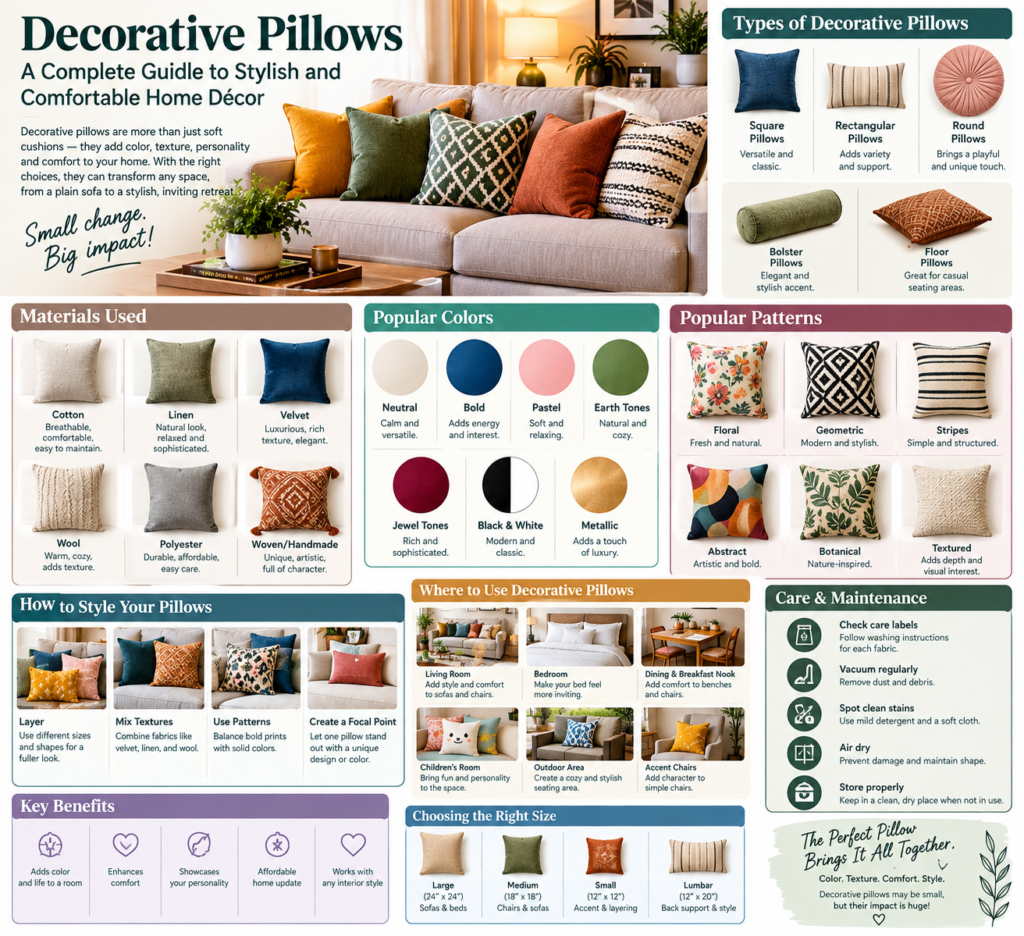
Decorative pillows are one of the easiest and most versatile ways to improve the appearance and comfort of a home. Although pillows are often associated with relaxation and support, decorative pillows serve another important purpose: they add personality, color, texture, and visual interest to interior spaces. A simple sofa, bed, chair, or bench can look completely different when decorated with carefully selected pillows.
Home décor does not always require expensive furniture, major renovations, or dramatic changes to walls and flooring. Sometimes, small accessories can make the greatest difference. Decorative pillows are a perfect example. They allow homeowners to experiment with different colors, patterns, materials, and styles without making permanent changes to a room. When tastes change or a new season arrives, pillows can easily be replaced or rearranged.
From soft velvet cushions and patterned cotton pillows to handmade woven designs and modern minimalist styles, there are countless options available. Decorative pillows can suit virtually every interior style, including contemporary, traditional, rustic, bohemian, Scandinavian, minimalist, industrial, and luxurious designs.
This guide explores decorative pillows in detail, including their benefits, different types, materials, colors, patterns, placement ideas, styling techniques, maintenance, and ways to choose the right pillows for different rooms.
What Are Decorative Pillows?
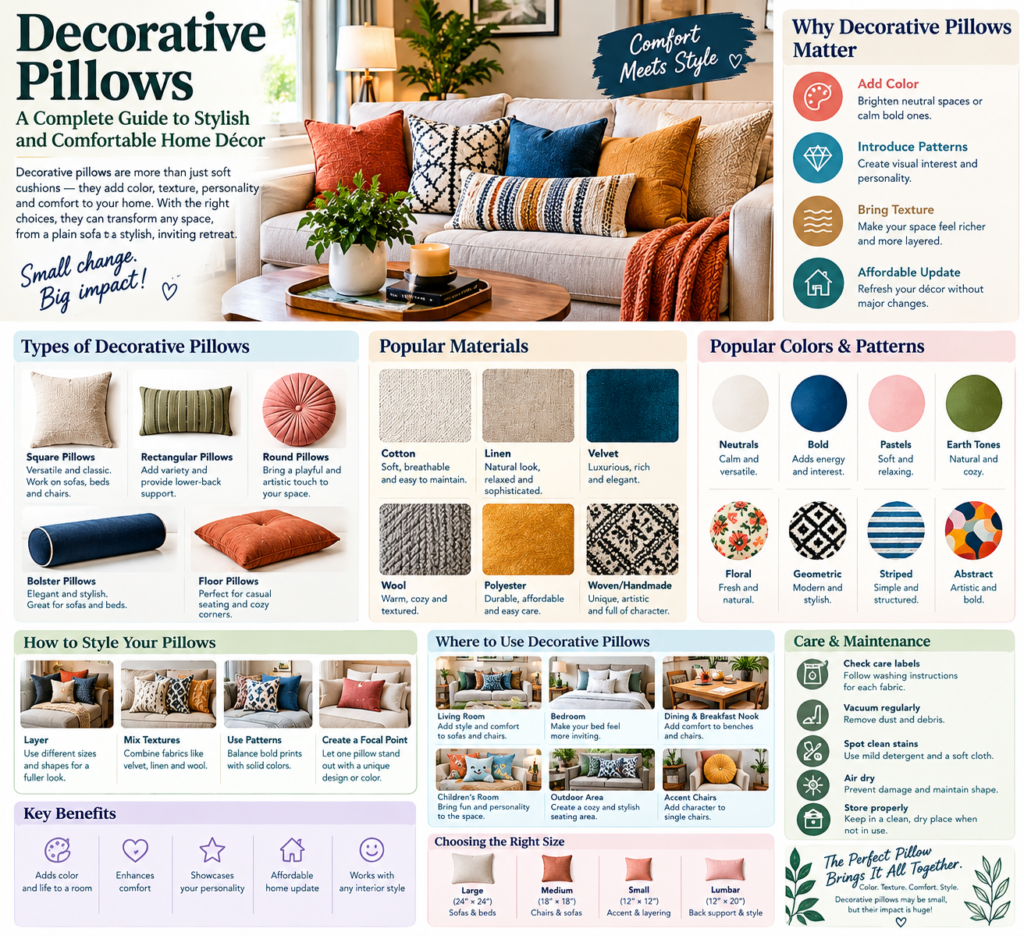
Decorative pillows are soft furnishings designed to enhance the appearance and comfort of an interior space. Unlike standard sleeping pillows, which are primarily designed to support the head and neck, decorative pillows are usually selected for their aesthetic qualities.
They come in different shapes and sizes, including square, rectangular, round, cylindrical, and uniquely shaped designs. Some are filled with synthetic fibers, foam, down alternatives, or other soft materials. Their covers can be made from cotton, linen, velvet, wool, polyester, leather, woven fabrics, or blends of different materials.
Decorative pillows can be placed on sofas, beds, armchairs, benches, window seats, and even outdoor furniture. Their purpose may be purely decorative, or they may provide additional comfort while sitting or relaxing.
One of the most attractive features of decorative pillows is their flexibility. A homeowner can change a room’s appearance simply by changing the pillows. For example, bright floral pillows can introduce a fresh spring-inspired look, while deep neutral or textured pillows can create a cozy atmosphere during colder months.
Why Decorative Pillows Matter in Home Décor
Decorative pillows may be small compared with sofas, beds, tables, and other furniture, but they can have a significant effect on a room. They act as finishing touches that bring different elements of an interior together.
One of their main benefits is their ability to introduce color. A neutral sofa can provide a perfect background for colorful pillows. Similarly, pillows in neutral shades can help calm a room that already contains bold colors.
Decorative pillows can also introduce patterns. Geometric designs, floral prints, stripes, abstract artwork, traditional motifs, and animal-inspired patterns can all add character to an interior.
Texture is another important advantage. Velvet, linen, wool, cotton, boucle, and woven fabrics each create a different visual and tactile experience. Mixing textures can make a room feel richer and more layered.
Pillows also provide an affordable way to update décor. Instead of replacing an entire sofa or bedroom set, homeowners can purchase new pillow covers or cushions and create a completely different atmosphere.
Types of Decorative Pillows
There are many different types of decorative pillows, and choosing the right style depends on the furniture, room, interior design, and personal preference.
Square Decorative Pillows
Square pillows are among the most common decorative pillow styles. They are versatile and work well on sofas, beds, armchairs, and benches.
Standard square pillows can be arranged behind smaller pillows to create layers. Larger square pillows can provide a comfortable base, while smaller ones can be placed in front for decoration.
Rectangular Pillows
Rectangular decorative pillows, sometimes called lumbar pillows, are longer and narrower than square pillows. They are particularly useful for adding variety to a pillow arrangement.
They can be placed in the center of a sofa or at the front of a layered arrangement on a bed. Their shape also provides useful lower-back support when used appropriately.
Round Pillows
Round decorative pillows are less traditional and can add a playful or artistic element to a room. They work particularly well in modern, eclectic, or bohemian interiors.
A round pillow can break up an arrangement dominated by square and rectangular shapes.
Bolster Pillows
Bolster pillows are long, cylindrical pillows often used as decorative accents. They can be placed at the front or sides of a sofa or bed arrangement.
They are particularly attractive when covered in luxurious materials such as velvet or richly patterned fabrics.
Floor Pillows
Floor pillows are larger cushions designed to be placed directly on the floor. They are useful for creating informal seating areas.
They work especially well in family rooms, children’s spaces, reading areas, and bohemian-style interiors. Several floor pillows in complementary colors can create a relaxed and welcoming environment.
Decorative Pillow Materials
The material of a decorative pillow affects its appearance, texture, comfort, durability, and maintenance requirements.
Cotton
Cotton is a popular choice because it is comfortable, breathable, and relatively easy to maintain. Cotton pillows are available in a wide range of colors and patterns.
They are suitable for everyday use and can work in almost any interior style.
Linen
Linen has a natural, relaxed appearance. It is often associated with minimalist, coastal, Scandinavian, and modern interiors.
Its slightly textured surface gives pillows a casual and sophisticated appearance at the same time. Linen is particularly effective when used in neutral shades such as beige, cream, white, gray, and soft earth tones.
Velvet
Velvet creates a luxurious and rich appearance. Its soft surface catches light differently depending on the direction of the fabric, creating visual depth.
Velvet pillows can be used to add elegance to living rooms, bedrooms, and formal seating areas. Deep green, navy, burgundy, charcoal, and jewel tones can make velvet pillows particularly striking.
Wool
Wool pillows can introduce warmth and texture. They are especially suitable for rustic, traditional, Scandinavian, and cozy interiors.
Woven wool designs can add natural character without relying on bright colors.
Polyester
Polyester is commonly used for decorative pillow covers and fillings because it is durable and often affordable. It is available in many textures, patterns, and colors.
Polyester blends can also provide practical options for households that need easy-care fabrics.
Woven and Handmade Fabrics
Handwoven pillows can bring craftsmanship and individuality into a room. They may feature traditional patterns, textured surfaces, embroidery, tassels, or other decorative details.
These pillows are particularly effective in bohemian, rustic, eclectic, and globally inspired interiors.
Choosing the Right Pillow Colors
Color is one of the most important factors when selecting decorative pillows. The right colors can connect furniture, walls, curtains, rugs, and other accessories.
One effective approach is to select colors already present in the room. For example, if a rug contains shades of green and beige, pillows can repeat those colors to create visual harmony.
Another option is to introduce a contrasting color. A neutral room can become more interesting with pillows in deep blue, mustard, terracotta, green, or another carefully selected accent color.
The number of colors should also be considered. Using too many unrelated colors can make a room look chaotic. A coordinated palette of two or three main colors is often easier to manage.
Neutral pillows can also be extremely effective. Cream, white, beige, gray, taupe, and brown pillows can create a sophisticated appearance while allowing furniture and artwork to remain the focus.
Using Patterns Effectively
Patterns can make decorative pillows visually exciting. However, combining multiple patterns requires some thought.
Floral patterns can create a soft and natural appearance. Geometric patterns can make an interior feel contemporary. Stripes can introduce structure, while abstract designs can create an artistic effect.
Different patterns can be mixed if they share at least one common color. For example, a floral pillow containing green and cream can be combined with a geometric pillow using the same green and cream palette.
Pattern scale is also important. A large pattern can be balanced with smaller patterns or solid-colored pillows. Using several large, competing patterns may make the arrangement feel overwhelming.
Decorative Pillows in the Living Room
The living room is one of the most common places for decorative pillows. Sofas and armchairs provide natural surfaces for displaying them.
A simple sofa can be transformed with a combination of large square pillows, smaller patterned cushions, and a rectangular lumbar pillow.
The number of pillows depends on the size of the furniture and the desired appearance. A minimalist interior may require only a few carefully selected pillows, while a more layered and luxurious style may use several.
Pillows can also help define the mood of the living room. Soft neutral pillows create a calm atmosphere, while bold colors and patterns can make the room energetic and expressive.
Decorative Pillows in the Bedroom
Decorative pillows are especially popular on beds. They can make a bedroom feel more comfortable, luxurious, and inviting.
A common arrangement involves placing sleeping pillows at the back, followed by larger decorative pillows and smaller accent pillows toward the front. A long lumbar or bolster pillow can complete the arrangement.
Color coordination is particularly important in bedrooms. Pillows can match or complement the bedding, curtains, rug, headboard, or artwork.
For a calm bedroom, soft neutral colors and natural fabrics are often effective. For a more dramatic bedroom, rich colors, velvet textures, and decorative patterns can create a stronger visual effect.
Decorative Pillows in Dining and Breakfast Areas
Although decorative pillows are less common in dining spaces, they can be used effectively on benches, breakfast nooks, and built-in seating.
A few small cushions can make a dining bench more comfortable while adding color and texture.
Because food and drinks are often present in these areas, washable and durable pillow covers are generally practical choices.
Decorative Pillows in Children’s Rooms
Decorative pillows can add fun and personality to children’s bedrooms and play areas. They are available in designs featuring animals, stars, shapes, cartoons, vehicles, flowers, and many other themes.
When choosing pillows for children, safety and age appropriateness should be considered. Decorative cushions should be used thoughtfully, particularly around babies and very young children, and any cords, buttons, beads, or loose decorative components should be evaluated carefully.
Bright colors can create a playful environment, while softer colors can contribute to a calm bedroom.
Outdoor Decorative Pillows
Outdoor decorative pillows can make patios, balconies, terraces, and garden seating areas more comfortable and attractive.
Outdoor pillows are generally made from materials designed to handle sunlight and moisture better than ordinary indoor fabrics. However, they still require care and should be protected from harsh weather when possible.
Outdoor pillows can coordinate with garden furniture, rugs, umbrellas, plants, and other outdoor accessories.
How to Arrange Decorative Pillows
The arrangement of pillows can determine whether a space looks professionally decorated or simply cluttered.
One common approach is layering. Large pillows are placed at the back, medium pillows in the middle, and smaller or rectangular pillows toward the front.
Another approach is symmetry. Matching pillows can be placed on both sides of a sofa or bed to create a formal and balanced appearance.
Asymmetry can create a more relaxed and contemporary look. Different pillows can be arranged on each side while still maintaining balance through color, size, or texture.
The key is to create visual variety without making the furniture look overcrowded.
Mixing Textures
Texture is often overlooked when decorating with pillows, but it can have a major effect.
Imagine a sofa decorated with pillows made from exactly the same fabric. The arrangement may look neat, but it could lack depth. Now imagine combining linen, velvet, woven fabric, cotton, and textured materials. The arrangement becomes more visually interesting.
Texture can also be used to influence the atmosphere. Soft velvet creates luxury, linen creates relaxation, woven materials create natural character, and fluffy textures create coziness.
Decorative Pillows and Interior Design Styles
Different pillow styles complement different interior designs.
Minimalist Style
Minimalist interiors usually benefit from simple pillows in neutral colors. Solid colors, subtle textures, and clean designs work better than excessive patterns.
Bohemian Style
Bohemian interiors can accommodate rich colors, multiple patterns, tassels, embroidery, woven fabrics, and unusual shapes.
Scandinavian Style
Scandinavian interiors often use soft neutral colors, simple patterns, natural fabrics, and understated textures.
Rustic Style
Rustic interiors can incorporate earthy colors, woven materials, traditional patterns, wool, cotton, and natural textures.
Modern Style
Modern rooms can use geometric patterns, bold accent colors, simple shapes, and smooth fabrics.
Luxury Style
Luxury interiors often benefit from velvet, silk-inspired fabrics, metallic details, rich colors, and elegant patterns.
Decorative Pillows on Accent Chairs
Accent chairs can sometimes look incomplete without a small decorative pillow. A single cushion can make a chair appear more inviting while providing additional comfort.
A patterned pillow can also turn a plain chair into a visual feature. If the chair is already colorful or patterned, a neutral pillow may be more appropriate.
Using Decorative Pillows to Introduce Seasonal Décor
One of the easiest ways to update a home throughout the year is by changing decorative pillow covers.
Spring-inspired décor can include floral patterns and fresh colors. Summer décor may use lighter fabrics and bright or coastal-inspired shades. Autumn can feature earthy colors such as rust, brown, mustard, and olive. Winter décor can incorporate deep colors, velvet, wool, and cozy textures.
Holiday-themed pillows can also be used during celebrations. Because pillow covers are relatively easy to store, homeowners can maintain several seasonal collections without needing to replace their entire décor.
Decorative Pillows on a Budget
Decorating with pillows does not have to be expensive. One of the best ways to save money is to purchase pillow covers separately from inserts.
Existing pillow inserts can be reused with different covers. This makes it possible to change a room’s appearance without purchasing completely new cushions.
Another affordable option is to combine inexpensive solid-colored pillows with one or two statement pieces. A few carefully selected pillows can have a greater visual impact than a large collection of unrelated cushions.
DIY pillow covers can also be created using suitable fabric. People who enjoy sewing or craft projects can customize colors, patterns, sizes, and decorative details.
Choosing the Right Size
Size is an important consideration when purchasing decorative pillows. Very small pillows may disappear on a large sofa, while oversized pillows can overwhelm a small chair.
Large square pillows are often suitable for sofas and beds. Medium pillows can add variety, while smaller rectangular pillows work well as finishing accents.
The furniture itself should guide the choice. A large sectional sofa can accommodate larger and more numerous pillows than a small accent chair.
Caring for Decorative Pillows
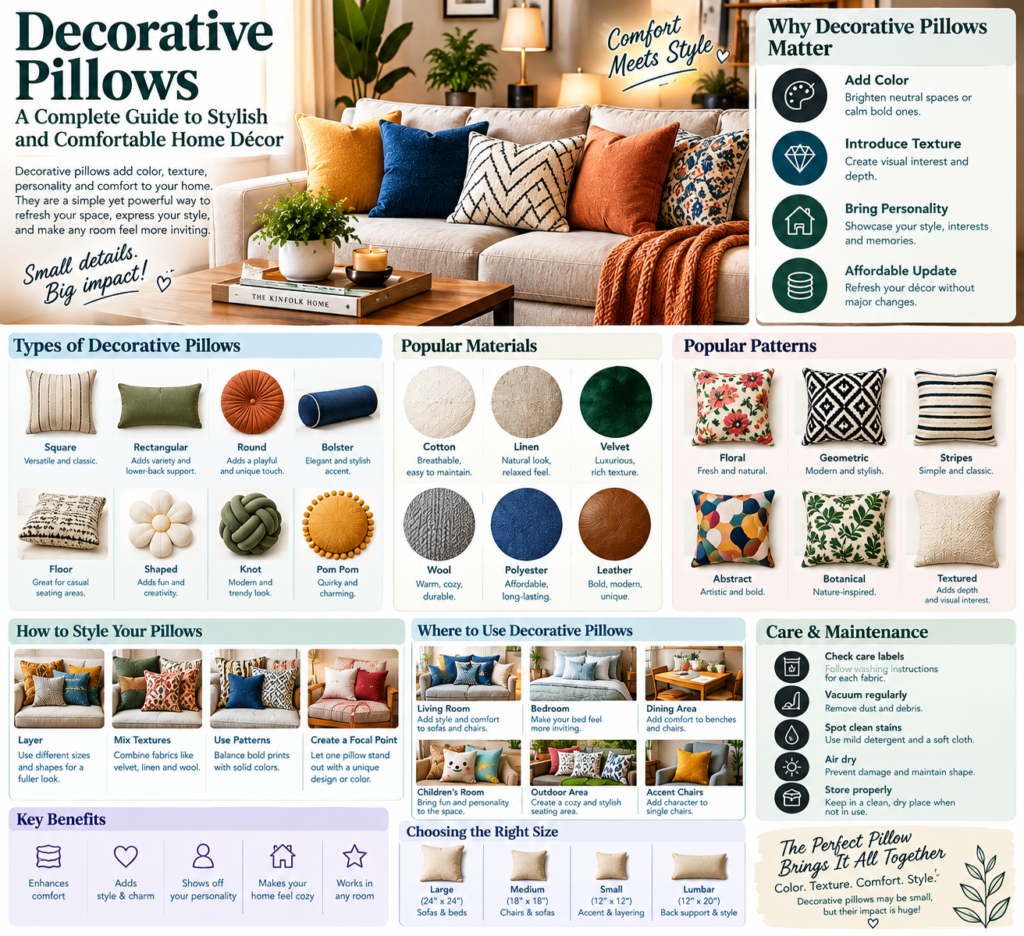
Proper maintenance can keep decorative pillows attractive and extend their lifespan.
Pillow covers should be cleaned according to their care instructions. Some can be machine washed, while others may require hand washing or professional cleaning.
Regular vacuuming or gentle brushing can help remove dust and debris. Pillows should also be aired occasionally when appropriate.
If pillows are exposed to direct sunlight for long periods, some fabrics may fade. Rotating their positions can help distribute exposure.
Outdoor pillows should be protected from prolonged moisture and harsh weather whenever possible.
Storing Decorative Pillows
When seasonal or decorative pillows are not being used, they should be stored properly. Pillow covers should generally be cleaned and completely dried before storage.
Breathable storage containers or fabric bags can help protect them from dust while allowing air circulation. Avoid storing damp pillows because moisture can lead to unpleasant odors or damage.
Storing covers separately from bulky inserts can also save space.
Common Decorative Pillow Mistakes
One common mistake is using too many pillows. Although a large number can create a luxurious appearance, excessive pillows can make a sofa difficult to use.
Another mistake is matching everything too perfectly. If the pillows, curtains, rug, and furniture all have identical patterns or colors, the room may lack visual interest.
Choosing pillows that are all the same size can also create a flat appearance. Mixing shapes and sizes usually produces a more dynamic arrangement.
Poor-quality materials can be another issue. A pillow may look attractive initially but lose its shape or color quickly if the fabric and filling are not durable.
Finally, homeowners should avoid ignoring comfort. Decorative pillows should look beautiful, but they should also be comfortable when people use the furniture.
How Decorative Pillows Affect the Atmosphere of a Room
Decorative pillows can influence the emotional feeling of a room. Soft colors and natural textures can create a peaceful environment. Bright colors can make a space feel energetic and cheerful. Dark colors can create drama and sophistication.
Texture also contributes to atmosphere. Plush materials can make a room feel cozy, while smooth fabrics can create a cleaner and more refined appearance.
This makes decorative pillows useful tools for homeowners who want to change the feeling of a room without making structural changes.
Personalizing Your Space With Decorative Pillows
A home should reflect the personality of the people who live there. Decorative pillows provide an easy way to express individual taste.
Someone who loves nature might choose botanical or floral patterns. A traveler might select pillows inspired by different cultures or destinations. Someone who prefers minimalist décor may choose simple neutral designs.
Personalized or handmade pillows can also make a room feel unique. Embroidery, initials, meaningful phrases, artwork, or custom patterns can turn an ordinary cushion into a personal statement.
Combining Decorative Pillows With Other Accessories
Pillows should not be viewed in isolation. They work best when they complement other elements in a room.
A pillow can repeat the color of a rug, artwork, curtain, vase, lamp, or decorative object. This creates connections between different parts of the room.
However, exact matching is not necessary. Complementary colors and similar textures can create harmony without making everything look identical.
A room with a neutral sofa, wooden furniture, green plants, a textured rug, and pillows containing green and earth tones can feel cohesive even when none of the items are exact matches.
The Role of Decorative Pillows in Modern Homes
Modern homes often focus on flexibility and personal expression. Decorative pillows fit naturally into this approach because they can be changed easily as tastes and needs evolve.
They also provide an affordable way to experiment with trends. If a particular color or pattern becomes popular, homeowners can introduce it through pillows rather than making expensive changes to furniture.
This flexibility makes decorative pillows particularly valuable for renters and people who prefer to refresh their homes regularly.
Conclusion
Decorative pillows are much more than simple cushions placed on sofas and beds. They are important home accessories that can transform the appearance, comfort, and atmosphere of an interior space. Through color, pattern, texture, shape, and arrangement, pillows provide homeowners with an easy and affordable way to express their personal style.
Whether the goal is to create a luxurious bedroom, a cozy living room, a playful children’s space, a relaxed outdoor area, or a minimalist home, decorative pillows can play an important role. Their versatility allows them to complement almost every interior design style.
Choosing the right decorative pillows involves considering several factors, including size, material, color, pattern, texture, durability, and placement. A successful arrangement does not necessarily require a large number of pillows. Instead, the best results often come from selecting a few pieces that work together while providing enough variety to create visual interest.
Decorative pillows also make it easy to refresh a room. Seasonal pillow covers, new patterns, different textures, and changing color combinations can give familiar furniture a completely different appearance. This makes pillows one of the simplest tools for updating home décor without spending large amounts of money.
Ultimately, the best decorative pillows are those that combine beauty with practicality. They should complement the surrounding furniture and accessories while contributing to the comfort of the people who use the space. With thoughtful selection and creative arrangement, decorative pillows can turn ordinary rooms into welcoming, stylish, and personalized environments.
For homeowners looking for a simple way to improve their interiors, decorative pillows are an excellent choice. They may be small accessories, but their ability to add color, comfort, texture, personality, and character makes them one of the most useful and adaptable elements of modern home décor.
For more info check out our main website here http://ezhomeaura.com