Discover stunning TV area design ideas for modern homes, including stylish TV wall designs, space-saving layouts, lighting tips, and beautiful entertainment units to transform your living room.
TV area design ideas are no longer just about where to put a screen. The television has become the busiest spot in most living rooms, so the way you frame it, light it, store its gadgets and seat people around it decides whether the room feels polished or chaotic. In this guide, the EzHomeAura team walks through 30 practical TV area design ideas, from a simple TV wall design to a full media wall, with sizes, heights, budgets and mistakes to avoid. It works for homeowners and renters in the USA, UK, Canada, Australia, Italy and across Europe.
Key Takeaways TV area design ideas
- Mount the TV so the center of the screen sits at seated eye level, roughly 42–48 inches (107–122 cm) from the floor.
- Pick the TV size from your viewing distance, not from the biggest model in the shop.
- Hide cables and gadgets first. Clean wiring makes even a budget setup look expensive.
- Treat the wall as a feature: paint, wood slats, shelves, stone or art all make the screen look intentional.
- Use indirect, dimmable light behind and beside the screen to reduce glare and eye strain.
- Anchor TVs and tall furniture to the wall, especially in homes with children.
Table of Contents
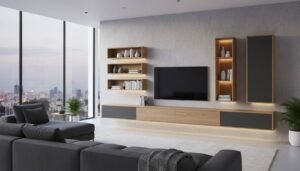
TV Area Design Basics: Placement, Height and Distance
Before choosing a style, get the fundamentals right. A beautiful living room TV wall still fails if the screen is too high, too small for the room or facing a window.
Where should the TV go in a living room?
The best spot for a TV is usually on the wall that faces your main seating, away from direct sunlight. Avoid placing the screen opposite a large window, because daytime reflections wash out the picture. If the only free wall is bright, choose a matte or anti-glare screen and add curtains or blinds.
Fireplaces are a classic dilemma. Many designers say the fireplace and TV compete for attention. If you want both, balance them with symmetrical shelves, or consider a separate focal wall so neither feels like an afterthought. This is why a TV above fireplace setup works best when the mantel is low and the screen can tilt down.
What height should a TV be mounted?
A reliable rule is to place the center of the screen at eye level when you are seated. For most sofas that means about 42–48 inches (107–122 cm) from the floor to the screen center. Mounting too high is the most common TV mounting mistake and can cause neck strain over long movie nights.
How far should you sit from the TV?
Viewing distance depends on screen size and resolution. For 4K TVs, a comfortable range is roughly 1 to 1.5 times the screen’s diagonal. Home-theater bodies such as THX also reference viewing angle, so treat this table as a starting point and adjust to your room.
| TV Size (diagonal) | Approx. Best Distance (4K) | Best For |
|---|---|---|
| 43 inch (109 cm) | 3.5–5.5 ft (1.1–1.7 m) | Bedrooms, small apartments |
| 55 inch (140 cm) | 4.5–7 ft (1.4–2.1 m) | Compact living rooms |
| 65 inch (165 cm) | 5.5–8 ft (1.7–2.4 m) | Most family rooms |
| 75 inch (190 cm) | 6–9.5 ft (1.9–2.9 m) | Large living rooms |
| 85 inch (216 cm) | 7–10.5 ft (2.1–3.2 m) | Open-plan spaces, media rooms |
TV Wall Design Ideas (Ideas 1–10)
The wall behind the screen sets the mood for the whole room. These TV background design and TV feature wall ideas suit different budgets and styles.
1. Painted feature wall
Paint is the cheapest upgrade. A deep shade such as navy, charcoal or forest green makes the black screen blend in instead of standing out. Light walls do the opposite and highlight the TV, so choose based on whether you want it hidden or celebrated.
2. Wood slat or fluted panel wall
Vertical wood slats add warmth and texture and are hugely popular in modern TV wall panel design. Place acoustic felt behind the slats if you want better sound absorption. Budget alternatives include MDF fluted panels or peel-and-stick slat sheets.
3. Marble or stone-look backdrop
A marble, travertine or large-format porcelain wall feels luxurious without shouting. Real stone is costly, so use porcelain slabs or a stone-effect laminate to get the look for much less.
4. Built-in media wall
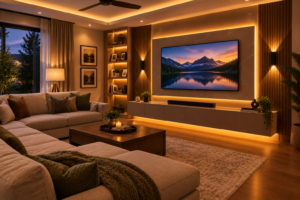
A built-in TV wall unit with side cabinets and open shelves turns the whole wall into one clean feature. It hides cables, stores consoles and gives you display space. It costs more than a stand, but it adds real value to the home.
5. Gallery wall around the TV
Frame the screen with art, mirrors and photographs so it becomes one part of a collection. Keep spacing even, and align the outer edges so the arrangement looks planned, not random.
6. Molding and wainscoting
Picture-frame molding painted the same color as the wall adds depth and a classic look. It is a favorite in traditional homes in the UK and Europe and costs little in materials.
7. Textured plaster or limewash
Textured finishes give a calm, organic backdrop that suits Japandi and Mediterranean interiors, especially popular in Italian homes. They also hide small wall imperfections.
8. Wallpaper accent
Choose a subtle pattern, grasscloth or a muted botanical print. Avoid very busy designs directly behind the screen, as they compete with the picture.
9. Floating shelves on both sides
Two sets of floating shelves frame the TV symmetrically. Fill them with books, plants and ceramics, but leave breathing room so the wall does not feel heavy.
10. Brick or exposed concrete
For industrial lofts, an exposed brick or concrete wall looks bold behind a mounted TV. Seal the surface to reduce dust, and add a wall plate rated for masonry when mounting.
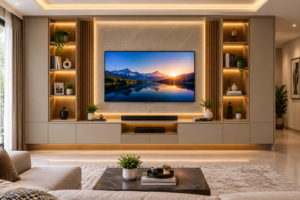
Want more wall inspiration for the rest of the room? See our guide to 75 living room decoration ideas.
TV Unit and Storage Ideas (Ideas 11–16)
The furniture below the screen does the daily work. The right TV unit design keeps remotes, consoles, games and cables out of sight.
11. Floating TV console
A wall-hung floating TV unit frees the floor, makes cleaning easy and makes small rooms feel larger. Check wall strength first, because consoles can carry heavy loads.
12. Low-profile media console
A long, low TV stand in oak, walnut or matte lacquer suits mid-century and Scandinavian rooms. Choose one slightly wider than the TV so the screen looks grounded.
13. Closed cabinet with cable management
Doors with ventilation slots hide the soundbar, router and streaming boxes. Pick fronts with push-to-open or slatted panels so remote signals still pass through.
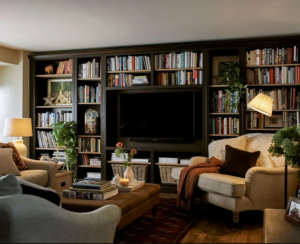
14. Open shelving with a TV niche
Recess the TV between shelves filled with books and plants. This TV niche idea brings depth and personality, and it works well in narrow rooms.
15. Corner TV unit
If your living room has an awkward corner, a corner unit uses dead space and leaves the longest wall free for a sofa or art. Allow a gap behind the unit for airflow and cables.
16. Hidden or motorized TV lift
For high-end rooms, a pop-up cabinet or ceiling-drop mount keeps the screen out of sight when not in use. Hire a qualified installer, and consult a home technology specialist, for example through, for a safe installation.
Small Living Room TV Ideas (Ideas 17–21)
A compact room needs clever small living room TV ideas to avoid looking cramped.
17. Wall-mounted TV with a slim bracket
A slim fixed or tilting mount keeps the screen close to the wall. No console is needed, so you save floor space and can add a slim shelf for a soundbar.
18. Art-mode or frame-style TV
Screens that display artwork when idle make the TV look like a framed picture. They cost more than standard models but suit rooms where the TV is the only wall focus.
19. Multi-purpose zone
Combine the TV area with a desk or reading nook using a single wall unit. A shared unit keeps the room organized and avoids multiple bulky pieces.
20. Swivel or articulating mount
In studio apartments, a swivel arm lets you angle the TV toward the sofa, bed or dining table, so one screen serves several zones.
21. Light colors and mirrors
Pale walls, a mirror on the side wall and light furniture bounce light around and open up a small TV area. Keep mirrors off the wall directly opposite the screen to avoid reflections.
Lighting and Decor Around the TV (Ideas 22–26)
22. LED backlight strip (bias lighting)
A soft LED strip behind the TV reduces contrast between the screen and the dark wall, which can ease eye strain. Choose warm white or a neutral tone and a dimmable option.
23. Wall sconces on either side
Sconces frame the TV and add a layered, designer look. They also give a gentle glow for evening viewing without lighting the screen directly.
24. Recessed cove lighting
A ceiling cove or shadow gap above the media wall adds a hotel-like glow. It is best planned during renovation, when electricians already have access to the ceiling.
25. Curtains and window control
Blackout or layered curtains solve glare problems. If the TV faces a window, thick drapes or blinds are essential for daytime viewing.
26. Rugs, plants and soft furnishings
A large rug under the seating zone, a floor plant in the corner and cushions in two or three coordinated colors make a TV area feel like a living space instead of a showroom. See our room decoration ideas for color and texture combinations.
TV Area Ideas for Other Rooms (Ideas 27–30)
27. Bedroom TV area
Mount the TV on the wall opposite the bed, lower than in a living room, because you will be lying down. A small console or shelf with a plant keeps it tidy. Choose a smaller screen, usually 32–43 inches, so it does not dominate the room.
28. Family room or basement TV lounge
Go for deep sectional seating, floor cushions and a large screen. Add built-in shelving for games, books and toys so the space works for the whole household.
29. Open-plan zoning
In open layouts, a TV wall can define the living zone. Use a sofa back, rug and wall feature to separate it from the kitchen or dining area.
30. Mini home cinema
For movie fans, a dedicated room with dark paint, acoustic panels, blackout curtains and a projector or large TV creates a cinema feel. Tiered seating is optional, but good sound and control of light are essential.
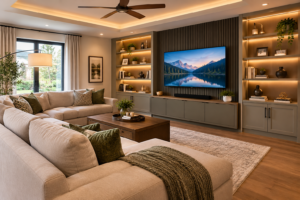
Comparison Table: Which Setup Suits You?
| Setup | Best For | Cost Level | Difficulty | Main Benefit |
|---|---|---|---|---|
| Painted feature wall | Renters, tight budgets | $ | Easy | Fast, dramatic change |
| Wood slat panels | Warm, modern rooms | $$ | Medium | Texture and acoustics |
| Floating console | Small and medium rooms | $$ | Medium | Open floor, easy cleaning |
| Built-in media wall | Homeowners | $$$ | Professional | Storage and resale value |
| Marble or stone wall | Luxury interiors | $$$$ | Professional | High-end look |
| Motorized TV lift | Formal living rooms | $$$$ | Professional | TV hides when off |
Pros and Cons of Wall-Mounting vs. a TV Stand
| Pros | Cons | |
|---|---|---|
| Wall-mounted TV | Saves floor space, clean look, safer from tipping, easier cable hiding | Needs proper fixing, harder to move, wall damage if removed |
| TV on a stand | No drilling, easy to rearrange, good for renters | Takes floor space, cables are more visible, tip-over risk if not anchored |
TV Area Design on a Budget
You do not need a renovation to get a stylish TV area. Start with these affordable DIY TV wall ideas:
- Paint: a single accent color is often the best value upgrade.
- Cable raceways: paintable cord covers hide wires for a few dollars.
- Peel-and-stick panels: wood-look or stone-look sheets suit rented homes.
- Ready-made shelves: mix store-bought cubes with a wood top to mimic a built-in.
- Thrifted frames: a gallery wall costs little when you paint all frames the same color.
- Plug-in LED strips: they add atmosphere for the price of a takeaway meal.
For ideas beyond the TV zone, browse more home decoration ideas and home accessories to finish the look. If you are planning a larger renovation, our construction material and labor cost guides help you estimate the work.
Common Mistakes to Avoid
- Mounting too high. Keep screen center near seated eye level.
- Ignoring glare. Check where windows and lamps reflect before you drill.
- Choosing a TV that is too large or small. Match size to seating distance.
- Leaving cables visible. Plan wiring before mounting, ideally inside the wall using a code-compliant kit.
- Skipping anchors. The U.S. Consumer Product Safety Commission warns about tip-over injuries, so secure TVs and furniture to the wall.
- Overcrowding the wall. Too many shelves and frames compete with the screen.
- Forgetting ventilation. Closed cabinets need airflow for devices.
- Single harsh ceiling light. Add layered, dimmable lighting for comfortable viewing.
Best Practices Checklist
Plan before you buy
- Measure wall width, ceiling height and seating distance.
- Locate wall studs and power sockets, and plan outlets behind the unit.
- Decide whether the TV should stand out or blend in.
Install safely
- Use a mount rated for your TV’s weight and VESA pattern.
- Fix into studs or use appropriate anchors for masonry.
- Hire a professional for large screens, fireplaces or in-wall wiring.
Style with intention
- Limit the palette to two or three main colors.
- Mix materials such as wood, metal and fabric for balance.
- Add something living, like a plant, to soften the technology.
Hint for energy-conscious homes: enable your TV’s eco or power-saving mode, and see guidance from the U.S. Department of Energy for ways to lower electronics energy use. If you also want to cut household bills, our solar panel guides are a good next read.
Frequently Asked Questions About TV Area Design
1. How do I design a TV area in my living room?
Start by choosing the wall that faces your seating and avoids glare. Set the TV height at seated eye level, add storage for devices, and finish with a feature wall, lighting and decor to blend the screen into the room.
2. What is the best height to mount a TV?
Place the center of the screen at your seated eye level, usually 42–48 inches (107–122 cm) from the floor. Lower it slightly in bedrooms, where you watch while lying down.
3. How can I make a TV look good on the wall?
Paint the wall a deep color, add wood slats or shelves, hide the cables, and frame the screen with art or sconces. A neat, symmetrical layout makes the TV look planned.
4. What is the best TV size for my room?
For 4K screens, sit roughly 1 to 1.5 times the diagonal away. For example, a 65-inch TV suits a viewing distance of about 5.5–8 feet (1.7–2.4 m).
5. How do I hide TV wires?
Use a paintable cord cover, an in-wall cable kit that meets local electrical rules, or a console with a back cut-out. Always follow building safety rules and consider an electrician.
6. Is it better to wall-mount a TV or use a stand?
Wall mounting saves floor space and looks cleaner, while a stand suits renters and quick changes. Whichever you choose, anchor the TV or furniture to prevent tipping.
7. How do I decorate around a TV?
Use shelves with books and plants, a gallery of frames, wall sconces or a backlight. Keep the arrangement balanced and avoid clutter near the screen.
8. What are good small living room TV ideas?
Try a slim wall mount, a floating console, a corner unit or a swivel arm. Light colors and a mirror on a side wall help the room feel larger.
9. Can I put a TV above a fireplace?
Yes, if the heat is low and the mount tilts down so the screen stays near eye level. Check the manufacturer’s heat guidance and have an installer confirm it is safe.
10. How much does a TV wall design cost?
A painted accent wall can cost very little, while wood panels, built-ins or stone cost more. Prices vary by country, materials and labor, so get at least two local quotes.
11. How do I reduce glare on my TV?
Move the TV away from windows, use blackout or layered curtains, choose matte finishes nearby and use indirect, dimmable lighting.
Conclusion
A great TV area balances comfort, storage, safety and style. Start with the basics: the right height, size and distance. Then pick a wall treatment, a storage solution and lighting that suit your budget and taste. Even small changes, such as a fresh paint color, hidden cables and a few well-placed lights, can turn a plain screen into a focal point you are proud of.
Which of these TV area design ideas will you try first? Share your setup in the comments, and keep exploring EzHomeAura for more home decoration ideas.