Discover smart Kids’ Room Storage Ideas to keep toys, books, clothes, and essentials organized. Explore practical, stylish, and space-saving solutions for kids’ bedrooms.
If your child’s floor disappears under a layer of plush toys, LEGO bricks, and mystery socks every evening, you are not alone. The best kids room storage ideas are the ones that match how children actually play: low, visible, easy to reach, and quick to tidy. In this guide, you will find 35 practical children’s bedroom storage ideas for toys, clothes, books, and school gear, plus age-by-age advice, budget and DIY options, safety rules, and a simple weekend plan to organise the whole room.
The Best Kids’ Room Storage Ideas
The most effective kids’ room storage solutions are under-bed drawers or storage beds, open cube shelves with fabric bins, wall-mounted shelves and picture ledges, over-the-door organisers, and multi-purpose furniture such as storage benches and ottomans. Add labels, keep everyday items at your child’s eye level, and use one bin per category. This combination works in small rooms, shared bedrooms, and playrooms alike.
Key Takeaways
- Declutter first, then buy storage. Most rooms need fewer containers than parents expect.
- Think in zones: sleep, play, dress, read, and study.
- Low and open storage encourages kids to tidy up on their own.
- Go vertical in small rooms: wall shelves, hooks, and over-the-door racks free up floor space.
- Choose furniture that grows with your child, such as adjustable shelves and modular cubes.
- Anchor every tall unit to the wall. This is non-negotiable.
- Rotate toys every few weeks so you store less and your child plays more.
Table of Contents
Before You Buy: Plan Your Kids’ Room Storage
Most parents start by shopping. Interior organisers start by editing. A child’s room is cluttered mainly because there is more stuff than storage, and no amount of baskets will fix that on its own. Spend one hour on planning and you will save money and frustration later.
Step 1: Declutter Into Four Piles
Sort everything into keep, donate, store away or rotate, and bin or recycle. Broken toys, dried-out markers, outgrown clothes, and single puzzle pieces go straight out. Involve your child where age-appropriate. Children aged four and up can usually decide between “favourite” and “I never play with this,” and the ownership makes them far more likely to keep the room tidy afterwards.
Step 2: Divide the Room Into Zones
Zoning is the foundation of good bedroom organisation for kids. Every item should have a home in the zone where it is used:
- Sleep zone: bed, bedside shelf, under-bed storage, night light.
- Play zone: toys, craft supplies, building sets, floor rug.
- Dress zone: wardrobe, drawers, laundry basket, shoe rack.
- Read zone: bookshelf, cushion, lamp.
- Study zone: desk, school bag hook, stationery caddy.
Step 3: Measure Everything
Measure the wall space, the height under the bed, the inside of the wardrobe, and the clearance behind the door. A bin that is two centimetres too wide is a bin you will return. Write the dimensions in your phone so you always have them while shopping.
Step 4: Apply the “Eye-Level, Easy-Reach” Rule
Children tidy up when putting things away is easy. Place daily-use items on shelves between knee and shoulder height. Store occasional items such as seasonal clothes, party outfits, or keepsakes higher up or under the bed.
Toy Storage Ideas That Actually Work
Toys are the biggest source of clutter, so we start here. The goal of toy storage for kids’ rooms is simple: contain the chaos without hiding everything so well that your child forgets they own it.
1. Open Cube Shelves With Fabric Bins
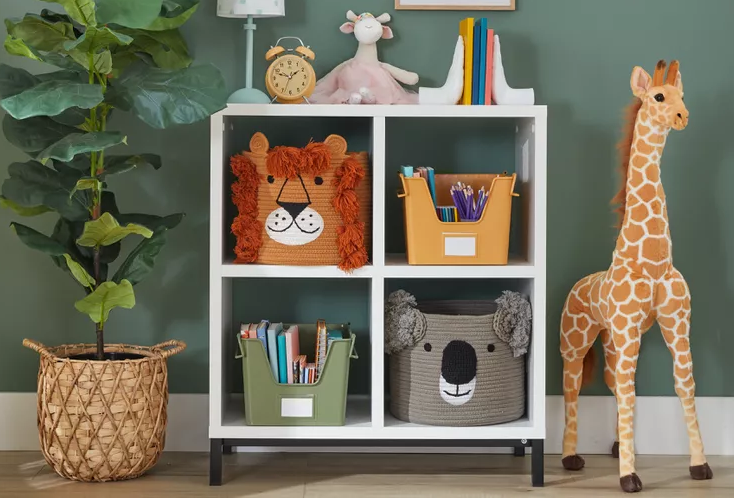
Cube organisers are the workhorse of kids’ bedroom storage. A 2×4 or 3×3 unit gives you a dedicated square for each toy category: cars, dolls, craft, building blocks. Use fabric or felt bins that slide in and out. Add a picture label so even a pre-reader can match the toy to the bin.
2. Rolling Storage Carts
A rolling cart with shallow trays suits art supplies, small figures, and sensory toys. It tucks into a corner during the day and rolls to the table at craft time. Choose a cart with locking wheels for safety.
3. Toy Hammocks and Corner Nets
Soft toys multiply quickly. A hanging toy hammock in a corner lifts plush animals off the floor and doubles as decoration. Install it high enough that it does not become a swing.
4. Stackable Crates and Baskets
Wooden or plastic crates are cheap, sturdy, and flexible. Stack them, turn them on their side as shelves, or add castors. Woven baskets add warmth and texture to a nursery or playroom. This is also one of the best budget kids’ storage ideas because you can start with two and add more as needed.
5. Clear Bins for Small Parts
LEGO, beads, and puzzle sets need containers where children can see the contents. Use clear, shallow bins with snap lids. Deep bins bury the pieces your child wants.
How to Store LEGO and Building Sets
Sort by colour for free play or by set for kits. A shallow under-bed tray and a play mat that folds into a bag make a quick clean-up. Keep the instruction booklets in a single binder or folder so they do not vanish.
6. Toy Chests and Storage Benches: Use With Care
A classic toy box looks lovely but tends to become a bottomless pit where favourite toys sink. If you choose one, pick a model with a soft-close or safety hinge, and ventilation holes. A storage bench at the foot of the bed is a better option because it holds bulkier items such as blankets and large games.
7. Toy Rotation System
Keep about a quarter of the toys out and store the rest in labelled boxes in the wardrobe or loft. Swap every two to four weeks. Children tend to engage more deeply with a smaller selection, and you will hold less clutter at any moment. Rotation is also the cheapest storage solution on this list.
Under-Bed and Bed Storage Ideas
The space beneath a bed is often the largest unused area in a child’s room. Putting it to work is one of the most efficient space-saving storage ideas for kids’ bedrooms.
8. Under-Bed Drawers and Rolling Bins
Shallow rolling drawers store out-of-season clothes, spare bedding, board games, and large toys. Measure the clearance first: most standard beds leave 15 to 25 cm (6 to 10 inches), which suits shallow trays but not deep boxes.
9. Storage Beds With Built-In Drawers
A storage bed (sometimes called a captain’s bed) swaps a separate chest of drawers for drawers built into the base. This frees up wall space and is ideal for rooms under 10 square metres. Check that the drawers have stoppers so they cannot be pulled completely out.
10. Loft Beds and High-Sleepers
A loft bed lifts the sleeping area and creates a full-height space beneath for a desk, a reading nook, or a wardrobe. It suits children roughly six and older; check the manufacturer’s age and safety guidance before buying.
11. Bunk Beds With Stair Storage
Bunk beds with stairs that double as drawers keep shoes, books, and games close to hand. In a shared room, they let each child claim a personal drawer or shelf.
12. Trundle and Lift-Up Mattress Beds
Ottoman-style beds with a gas-lift mattress base provide huge enclosed storage. They are best for bulky items you only need now and then, such as duvets, suitcases, or seasonal gear.
13. Headboards With Shelves
A bookcase headboard holds a lamp, a water bottle, bedtime books, and a few treasured items within arm’s reach. It also keeps the bedside area tidy without needing a separate table.
Wall and Vertical Storage Ideas
When floor space is limited, go up. Wall storage keeps toys and books visible, protects play areas, and makes a room feel larger. It also suits renters, because most options can be installed with a few screws and patched later.
14. Floating Shelves
Floating shelves hold books, trophies, and display toys. Keep heavy items low and place the highest shelf above a child’s reach for fragile keepsakes. Always fix into studs or use proper wall anchors rated for the load.
15. Picture Ledges for Front-Facing Books
Narrow picture ledges let children see book covers instead of spines. This simple change makes reading more inviting, especially for toddlers and early readers.
16. Pegboards
A pegboard is endlessly flexible. Hang baskets, hooks, small shelves, and craft tools, and rearrange as interests change. It is one of the best creative kids’ storage ideas for art lovers and makers.
17. Over-the-Door Organisers
Clear-pocket organisers hold shoes, stationery, hair accessories, small dolls, or bath toys. Hooks over the door suit school bags, dressing gowns, and costumes. Check the door still closes smoothly.
18. Wall-Mounted Baskets and Hanging Pockets
Hanging baskets keep small items off the floor and are easy for children to reach. Mount them at your child’s shoulder height, and raise them as they grow.
19. Wall Hooks at Child Height
Low hooks teach children to hang up coats, bags, and costumes. A row of three or four hooks with names or icons also helps in shared kids’ rooms.
20. Display Shelves for Treasures
Give your child a “gallery” shelf for the LEGO model, the rock collection, or the school craft they are proud of. Having a designated display space makes them less likely to leave treasures on the floor.
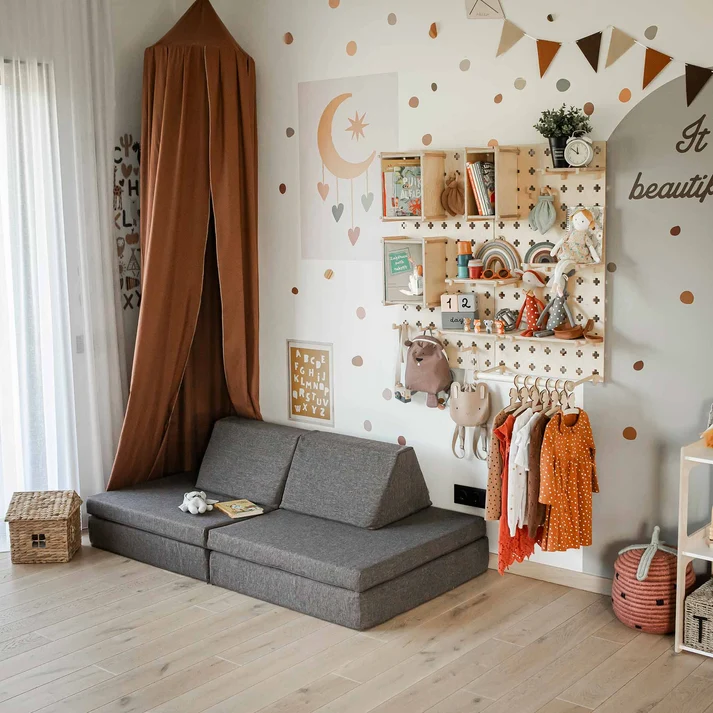
Picture ledges and a pegboard turn bare wall space into flexible storage.
Clothes and Closet Storage for Kids
Children grow fast, so kids’ wardrobe storage should be flexible. Many cheap closets have a single high rail that only an adult can reach. A few small changes make the same space work for a child.
21. Adjustable Closet Systems
Adjustable rails and shelves let you lower hanging space for a four-year-old and raise it again for a ten-year-old. Modular closet organisers are an easy upgrade for existing wardrobes.
22. Double-Hanging Rails
Because children’s clothes are short, a second rail halves the hanging space needed. Put the lower rail within your child’s reach for daily outfits.
23. Drawer Dividers and Folding Methods
File-fold t-shirts and leggings so they stand upright and each item is visible. Use dividers for socks and underwear. Label each drawer with a word or picture: “tops,” “bottoms,” “pyjamas.”
24. Hanging Shelf Organisers
Fabric hanging shelves add six or more compartments in a wardrobe and suit jumpers, shoes, and accessories.
25. Laundry Basket and Dirty-Clothes System
A dedicated hamper by the door or wardrobe cuts floor clutter. Use two bins, “wash” and “wear again,” for older children who wear items twice.
26. Shoe Storage
A low shoe rack, a bench with cubbies, or a hanging organiser keeps footwear near the door. Limit each child to a handful of everyday pairs.
Book Storage and Reading Nook Ideas
Children read more when books are visible and within reach. Front-facing displays beat tightly packed shelves for younger children because they recognise books by their covers.
27. Front-Facing Bookshelves
Rain-gutter shelves, ledges, and sling bookcases all show off covers. They are inexpensive, easy to install, and ideal for picture books.
28. Book Bins and Baskets
For toddlers, a low basket of board books beside the bed works well. Rotate the selection weekly to keep interest high.
29. A Cosy Reading Nook
Combine a beanbag or floor cushion, a small lamp, and a short shelf in a corner to create a reading zone. A canopy or tent adds a sense of privacy. Build the nook near a window if natural light allows.
Storage Ideas for Small Kids’ Rooms
Small spaces demand clever planning. If you are working with a box room, a shared nursery, or a rental apartment, these small kids’ room storage ideas make every centimetre count.
30. Multi-Purpose Furniture
Choose pieces that do two jobs: ottomans with storage, a desk with drawers, a bed with shelves, or a bench with a lift-up seat. Multi-functional furniture reduces the number of items in the room.
31. Use the Corners
Corner shelves, tall narrow bookcases, and triangular storage units use space that is usually wasted. A tall, narrow unit has a small footprint but holds a lot.
32. Keep Furniture Low and Visual Weight Light
Low furniture and light colours make a small room feel bigger. Avoid blocking windows and use mirrors sparingly to bounce light.
Small Room Checklist
- One main storage unit rather than several small ones.
- Under-bed storage in every sleeping area.
- Hooks on the back of the door and any free wall.
- Store off-season items elsewhere in the house.
- Limit toys on display to one shelf or one basket per category.
Shared Kids’ Room Storage Ideas
When siblings share a bedroom, ownership and fairness matter as much as space. Give each child clear territory and the tidy-up becomes easier.
33. Colour-Coded or Name-Labelled Storage
Assign each child a colour for bins, hooks, towels, and drawers. Younger children understand colours long before they read names.
34. Split Furniture and Personal Zones
Give every child their own shelf, drawer, or cubby. Even in the smallest room, a personal space reduces arguments. Bunk beds with separate drawers, or two identical wardrobes on opposite walls, create fair divisions.
Shared Space for Toys
Keep a communal toy shelf for games and building sets and a private box for each child’s special belongings. This simple approach reduces most sibling squabbles over “who took my toy.”
Storage Ideas by Age Group
A room that works for a toddler will not suit a ten-year-old. Planning for change saves money, because furniture that adapts lasts longer.
| Age | Main Storage Needs | Best Solutions | Key Tip |
|---|---|---|---|
| Babies and toddlers (0-3) | Nappies, clothes, board books, soft toys | Low open shelves, soft bins, dresser with a changing top | Anchor all furniture; avoid lidded chests |
| Preschool (3-5) | Toys, dress-up, craft, books | Cube shelves, picture-labelled bins, low hooks | Use pictures instead of words |
| School age (6-9) | Toys, school bag, sports gear, collections | Storage bed, desk with drawers, pegboard, display shelf | Let them choose the system |
| Tweens (10-12) | Clothes, hobbies, devices, books | Loft bed with desk, closet organisers, noticeboard | Add privacy and personal style |
| Teens (13+) | Clothing, tech, study materials | Large wardrobe, desk with shelves, cable management | Prioritise a clear study zone |
Storage for Toddlers and Babies
Think safety first. Choose rounded edges, soft-close drawers, and low shelves. Anchor every unit to the wall because toddlers will climb anything.
Storage for Preschoolers
This is the golden age for visual systems. Picture labels, colour-coded bins, and very low shelves encourage independence.
Storage for School-Age Children and Tweens
Add homework space, a school bag landing spot, and a place for collections. Let them help pick storage so they feel ownership.
Storage for Teenagers
Teens need privacy, a study area, and room for tech. Hidden storage such as a lift-up bed base or a lockable drawer is useful.
Budget and DIY Kids’ Storage Ideas
Great storage does not have to be expensive. Many families get excellent results with low-cost items and a bit of creativity.
Low-Cost Ideas Under $50 (or Equivalent)
- Repurposed crates stacked as shelves or fitted with castors.
- Shoe organisers hung on the door to hold small toys, craft items, or hair accessories.
- Shower caddies hung on the wall for pens, crayons, or bath toys.
- Cardboard magazine files covered in wrapping paper for books and papers.
- Mesh laundry bags hung on hooks for stuffed toys.
- Tension rods in a wardrobe to create an extra hanging rail.
Easy DIY Projects for a Weekend
- Rain-gutter bookshelf: Attach lengths of plastic guttering to the wall to display picture books.
- Pallet or plywood toy bench: Sand, paint, and add a cushion for seating plus storage.
- Cube bench from crates: Join crates with screws, top with a foam cushion.
- Peg-hook coat rack: A plank, a few wooden pegs, and paint make a personalised hanging station.
Storage Types Compared: Pros, Cons, and Costs
Use this table to decide which solutions suit your child’s room, your budget, and your space. Prices are rough ranges and vary by country and retailer.
| Storage Type | Best For | Pros | Cons | Typical Cost |
|---|---|---|---|---|
| Cube shelving + bins | Toys, books, craft | Flexible, kid-friendly, grows with child | Needs wall anchoring; bins add cost | $$ |
| Storage bed | Small rooms | Replaces a dresser; hides clutter | Costly; drawers are less accessible | $$$ |
| Under-bed drawers | Off-season items, bulky toys | Cheap, uses unused space | Dust gathers; low clearance limits use | $ |
| Toy chest | Soft toys, dress-up | Fast tidy-up; doubles as seat on some models | Toys sink; safety hinge needed | $$ |
| Wall shelves/ledges | Books, display items | Saves floor; looks good | Needs secure installation | $ |
| Pegboard | Craft, accessories | Highly adaptable | Can look busy | $$ |
| Over-the-door organiser | Shoes, small items | Renter-friendly; very cheap | Limited weight capacity | $ |
| Loft bed with desk | Small rooms, older kids | Adds floor area; multi-use | Not suitable for young children | $$$ |
Pros and Cons: Open vs. Closed Storage
Open Storage Pros
- Easy for children to use independently
- Everything is visible
- Usually cheaper
- Great for toddlers and preschoolers
Open Storage Cons
- Can look messy
- Collects dust
- Needs regular tidying
Closed Storage Pros
- Hides clutter instantly
- Protects items from dust
- Gives a calm, clean look
Closed Storage Cons
- Harder for young children to open
- Out of sight, out of mind
- Lids can pinch fingers
A mix works best: open storage for daily-use items and closed storage for the rest.
Safety Rules for Kids’ Storage Furniture
Safety is the most important part of any kids’ room storage plan, and it is where a trustworthy guide has to be clear. Falling furniture is a recognised hazard for young children, and consumer safety bodies in several countries publish guidance on it.
Safety Checklist
- Anchor everything tall. Use wall straps or brackets for any unit taller than about 80 cm.
- Avoid heavy lids. If you use a toy chest, choose one with a slow-closing or safety hinge and ventilation.
- Keep heavy items low. Put books and heavy toys on lower shelves.
- Check drawer stops. Drawers should not pull out completely or become step ladders.
- Choose non-toxic finishes. Look for low-VOC paint and certified wood products, especially in nurseries.
- Mind small parts. Keep items with small parts away from children under three.
- Check loft and bunk beds. Follow the age guidance given by the manufacturer and local safety rules.
- Manage cords and blinds. Keep cords from blinds and cable ties well out of reach of cots and beds.
For official guidance, see the US Consumer Product Safety Commission’s Anchor It campaign, the American Academy of Pediatrics’ HealthyChildren.org, and the Australian Product Safety website.
Common Kids’ Room Storage Mistakes
Even well-meaning parents run into the same traps. Avoiding these will save time and money.
1. Buying Storage Before Decluttering
More containers simply give clutter a bigger home. Edit first, buy second.
2. Choosing Adult-Height Solutions
If your child cannot reach it, they cannot put things away. Place daily items at their height.
3. Using Deep, Lidded Containers for Everything
Deep bins lose small toys; heavy lids discourage use. Use shallow, open containers for daily play.
4. Skipping Labels
Labels turn a pile of boxes into a system. Use pictures for children who cannot read yet.
5. Ignoring Safety
Unanchored furniture is a hazard. Take ten minutes to secure every tall piece.
6. Not Planning for Growth
A themed toddler unit may not suit a seven-year-old. Pick neutral, adjustable furniture and add themes with accessories.
7. Making the System Too Complicated
If tidying needs a flowchart, nobody will do it. Aim for five to eight broad categories at most.
Your Weekend Organising Plan
Here is a simple schedule you can follow to transform a messy room without losing your whole weekend.
Saturday Morning: Declutter
Empty the room in sections. Sort into keep, donate, rotate, and discard. Wash or wipe shelves as you go.
Saturday Afternoon: Zone and Measure
Decide where each zone belongs. Measure walls, closet, and under-bed space. Make a shopping list with sizes.
Sunday Morning: Install and Assemble
Assemble furniture, anchor tall pieces, and put up hooks and shelves. This is where a second pair of hands helps.
Sunday Afternoon: Fill, Label, and Teach
Fill containers, add labels, and walk your child through the system. Make it a game: “Where does the dinosaur live?” Finish with a quick five-minute tidy together so the habit starts on day one.
The Five-Minute Nightly Reset
A short bedtime reset keeps the system working. Set a timer, play a favourite song, and let your child return everything to its home. Consistency matters more than perfection.
Buying Tips for the US, UK, Canada, Australia, and Europe
Rooms, regulations, and retailers differ around the world, so keep these regional tips in mind when shopping.
- United States and Canada: Rooms are often larger, with big closets. Look for modular closet systems and check furniture for current safety certification. Rental-friendly wall solutions are popular in apartments.
- United Kingdom and Ireland: Bedrooms are often small, and box rooms are common. Under-bed storage, cabin beds, and slim units are especially useful. Metric measurements apply.
- Australia and New Zealand: Built-in wardrobes are common. Check local safety guidance for bunk and loft beds, and choose finishes suited to warm, humid climates.
- Italy and Continental Europe: Compact homes and apartments (a cameretta in Italy) favour multi-functional furniture, wall-mounted systems, and space-saving beds. European standards and the CE mark are worth checking when you buy.
Expert Insights: What Professional Organisers Recommend
Across interior design and professional organising advice, a few principles appear again and again:
- Make it easy to put things away. The fewer steps, the more likely children are to follow through.
- Use categories, not individual homes for every item. A “cars” bin beats a spot for every vehicle.
- Involve your child. Children who help design the system maintain it better.
- Review every season. Needs change quickly, and storage should too.
- Prioritise function over looks. A system that works beautifully always looks better than one that only looks nice.
This approach also reflects child-led learning ideas such as the Montessori method, which favours low, accessible shelves and a small number of items on display. You can read more at the American Montessori Society.
Frequently Asked Questions About Kids’ Room Storage
1. What is the best storage for a kids’ room?
The best storage combines open cube shelves with fabric bins, under-bed drawers, wall shelves, and hooks. This mix keeps toys, clothes, and books accessible while freeing floor space.
2. How do I organise a small kids’ bedroom?
Declutter first, then use vertical space with wall shelves and hooks, add under-bed storage, and choose multi-purpose furniture such as a storage bench or a bed with drawers.
3. How can I store toys without a toy box?
Use cube shelves with bins, stackable crates, rolling carts, hanging nets, or baskets. Sort toys by category and label each container.
4. What are good budget kids’ room storage ideas?
Repurposed crates, over-the-door shoe organisers, mesh laundry bags, tension rods, and DIY rain-gutter bookshelves all offer low-cost storage.
5. How do I keep a kids’ room tidy every day?
Give every item a home, use open bins at your child’s height, label everything, and build a five-minute nightly tidy-up routine.
6. How many toys should a child have in their room?
There is no fixed number, but a smaller visible selection works better. Keep a quarter of the toys out and rotate the rest every few weeks.
7. Is a storage bed good for kids?
Yes, especially in small rooms. A storage bed replaces a dresser and keeps the room tidy. Make sure the drawers have stoppers and the bed meets local safety standards.
8. How do I organise a shared kids’ room?
Give each child personal storage, use colour coding or name labels, and keep a shared shelf for communal toys and games.
9. At what age can children use a loft bed?
Many manufacturers recommend loft and high-sleeper beds for children around six years and older. Always check the specific product’s age guidance.
10. Do I need to anchor kids’ furniture to the wall?
Yes. Anchor bookcases, dressers, wardrobes, and cube units to prevent tipping, which is a known hazard for young children.
11. How do I store books in a child’s room?
Use front-facing shelves, picture ledges, or low baskets so children can see covers and choose their own books.
12. How do I make storage that grows with my child?
Choose modular cubes, adjustable shelving, neutral colours, and furniture that changes function, such as a toy bench that later becomes a seat or shoe store.
Conclusion: Build a System Your Child Can Actually Use
The secret to great kids room storage ideas is not a single clever product. It is a simple system: declutter, create zones, store things where they are used, keep daily items low and open, label everything, and keep the room safe. Start with one corner this weekend, whether that is an under-bed drawer, a cube shelf, or a row of hooks, and build from there.
Ready for more ideas? Explore our guides on small bedroom storage ideas, nursery decor ideas, and playroom design, and pick pieces that grow with your family.
Disclaimer: Safety information in this article is general guidance. Always follow the manufacturer’s instructions and your local safety regulations.
By the EZ Home Aura Team | Last updated: October 2026 |
You can visit our more page click here: https://ezhomeaura.com/