When most people think about home decoration, they think about paint colours, furniture, and fabrics. But electricity home decoration the strategic use of lighting, illuminated fixtures, smart electrical panels, and decorative wiring solutions is the single most powerful and often most underestimated tool in any interior designer’s kit. Light shapes space, shifts mood, and can make a modest room feel like a luxury suite or a sprawling open-plan living area feel warm and intimate.
This comprehensive guide covers every aspect of using electricity creatively in your home: from LED strip lighting and cove illumination to smart home systems, decorative outlet covers, neon signs, illuminated staircases, and outdoor electrical décor. Whether you’re renovating a Victorian terraced house in London, updating a condo in Toronto, decorating a new build in Sydney, or refreshing a family home in the American Midwest these ideas work across budgets, styles, and spaces.
⚡ Key Takeaways
- Layered lighting (ambient + task + accent) is the foundation of every well-decorated room.
- LED technology cuts lighting energy costs by up to 75% versus incandescent bulbs.
- Smart lighting systems can increase a home’s resale value by 3–5% (NAR, 2025).
- Decorative switches and outlets are inexpensive upgrades with massive visual impact.
- Always hire a licensed electrician for any new circuit, panel work, or outdoor installation.
- Proper planning prevents over-lit or under-lit rooms both common, costly mistakes.
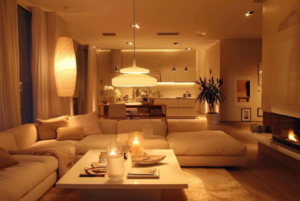 A beautifully lit living room featuring layered ambient, task, and accent lighting with LED cove lighting and a statement pendant fixture.
📋 Table of Contents
- Understanding Layered Lighting
- Living Room Lighting & Décor Ideas
- Bedroom Electrical Decoration
- Kitchen Lighting Solutions
- Bathroom Electrical Décor
- Dining Room & Pendant Lights
- Home Office Lighting
- Outdoor & Garden Electrical Décor
- Staircase & Hallway Lighting
- Smart Home & Automated Lighting
- Decorative Switches, Outlets & Panels
- LED Strip Lighting: The Complete Guide
- Cost Guide by Country
- DIY vs Professional Installation
- Safety & Code Compliance
- 2026 Trends in Electrical Home Décor
- Common Mistakes to Avoid
- FAQ
1. Understanding Layered Lighting: The Foundation of Electrical Home Decoration
Before choosing a single bulb or fixture, every homeowner and interior designer should understand the concept of layered lighting. This principle, universally endorsed by lighting designers, divides illumination into three distinct layers that work together to create functional and beautiful spaces.
The Three Layers of Lighting
Ambient Lighting (General Light)
Ambient lighting is the base layer the overall illumination that replaces natural daylight. It includes ceiling fixtures, recessed downlights, flush-mount lights, and chandeliers. The goal is even, shadow-free brightness across the room. In modern homes, dimmable LED downlights in a 2700K–3000K colour temperature are the gold standard for warm ambient light.
Task Lighting (Functional Light)
Task lighting targets specific work zones: under cabinet kitchen lights, desk lamps, bathroom vanity strips, and reading sconces. It needs to be brighter and more focused than ambient light, and positioned to avoid glare and shadows.
Accent Lighting (Decorative / Atmospheric Light)
This is where electricity home decoration becomes truly creative. Accent lighting highlights architectural features, artwork, shelving, plants, and textured walls. It includes picture lights, LED strip coves, wall washers, uplights, and spotlights. Accent lighting typically needs to be 3× brighter than ambient light to create effective contrast.
The ideal ratio for a well-lit room: 60% ambient + 30% task + 10% accent. Adjust the accent percentage upward (to 20–30%) in entertainment spaces or rooms you want to feel dramatic and luxurious.
2. Living Room Electrical Decoration Ideas
The living room is the heart of every home and the room where electrical decoration has the greatest impact. It needs to serve multiple purposes family time, entertaining, movie watching, reading which means flexible, layered lighting is essential.
Statement Chandeliers & Pendant Lights
A large statement chandelier or cluster pendant immediately elevates a living room. For high ceilings (9ft+), dramatic multi-arm chandeliers in matte black, brushed brass, or aged copper create a striking focal point. For standard-height ceilings, a single large pendant over a coffee table anchors the seating area. Pair with a dimmer switch so you can shift from bright entertaining light to soft ambiance at the touch of a dial.
Recessed Downlights with Dimmer Control
A grid of LED recessed downlights gives clean, contemporary general lighting. The key upgrade: always install dimmers. A bright grid of downlights at full power is harsh and uninviting; dimmed to 30–50%, the same lights create a warm, inviting atmosphere. Use a smart dimmer (Lutron Caseta, Legrand Radiance) for app and voice control.
Cove Lighting & Tray Ceiling Illumination
Cove lighting LED strips installed inside a recessed ledge or tray ceiling creates a soft, indirect glow that makes ceilings appear to float. This is one of the most popular electrical decoration for home upgrades in 2026. Choose warm white (2700K) for cosy living rooms or tunable white LEDs for flexibility.
Wall Sconces & Picture Lights
Flanking a sofa with a pair of wall sconces adds symmetry and reading light. Picture lights above artwork not only illuminate your collection but create visual interest and depth. Both can be hardwired for a clean, cordfree look.
LED TV Bias Lighting
LED strips behind your television reduce eye strain, make colours appear more vivid, and add a cinematic atmosphere to movie nights. Smart bias lighting kits (like Govee or Philips Hue Play) sync colours with on-screen content for a stunning effect.
Living Room Cove Lighting
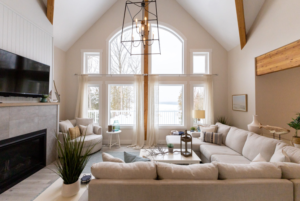
Modern living room with warm LED cove lighting in a tray ceiling, statement pendant, and LED TV bias lighting.
3. Bedroom Electrical Decoration: Light for Rest, Romance & Relaxation
Bedroom lighting should be calming, flexible, and personal. Overhead glare is the enemy of good sleep — yet most bedrooms still rely on a single central ceiling light. Here’s how to upgrade every bedroom with smart electrical decoration.
Bedside Reading Sconces (Hardwired)
Replacing bedside lamps with hardwired wall sconces frees up nightstand space, eliminates trailing cords, and gives each side of the bed its own controllable reading light. Choose adjustable arm sconces so you can direct light precisely where needed.
LED Strips Under the Bed Frame
Under-bed LED strips create a beautiful floating effect and serve as soft night lighting. Set to a very dim warm white or amber, they provide enough light to navigate the room at night without fully waking you. Motion-sensor versions that activate when you step out of bed are especially practical.
Wardrobe & Closet Interior Lighting
LED strip lights or slim LED bar lights inside wardrobes transform getting dressed in the morning. Install motion-activated LED strips on wardrobe rails or shelving to automatically illuminate when you open the doors.
Smart Bulbs & Wake-Up Lighting
Smart bulbs (Philips Hue, LIFX, Sengled) can be programmed to gradually brighten from 0% to 100% over 30 minutes before your alarm time, simulating sunrise. This has been shown to improve mood, reduce morning grogginess, and regulate circadian rhythms.
Ceiling Star Effects & Fibre Optic Panels
Fibre optic star ceiling panels are a luxury bedroom feature that creates a night-sky effect on the ceiling. These use a single LED driver connected to hundreds of thin fibre optic strands embedded in a panel. They consume very little energy and create a magical atmosphere.
4. Kitchen Lighting Solutions: Task, Ambiance & Style
Kitchens require the most technically demanding lighting of any room you need bright task lighting at the counters, comfortable ambient light for dining, and decorative touches that make the space feel designed rather than merely functional.
Under-Cabinet LED Task Lighting
Under-cabinet lighting is the single most practical electrical upgrade in any kitchen. LED strip lights or slim LED bars mounted under upper cabinets illuminate the countertop directly eliminating the shadow your body creates when working under an overhead light. Choose a neutral 4000K colour temperature for accurate colour rendering of food and materials.
Pendant Lights Over Kitchen Islands
A row of pendant lights over a kitchen island serves both decorative and functional purposes. Standard guidance: hang pendants 30–36 inches above the countertop, space them 24–30 inches apart. Mix materials glass, metal, concrete, rattan to add personality while maintaining visual harmony.
Recessed Lighting Grid in the Ceiling
A properly planned grid of LED recessed downlights provides even ambient illumination across the entire kitchen. Use IC-rated fixtures (safe for insulated ceilings) and always connect to dimmer switches for versatility.
Cabinet Interior LED Lighting
Glass-fronted upper cabinets with interior LED lighting look stunning and practical you can see your dishes, glassware, or decorative items without opening the doors. Use warm white (2700K) strips for china and glassware; cooler 4000K for pantry and utility cabinets.
Toe-Kick Lighting
LED strips installed at the base of kitchen cabinets (in the toe-kick recess) create a soft glow at floor level. This subtle detail is used extensively in high-end kitchen design and creates a sophisticated, studio-like atmosphere especially beautiful when combined with polished stone or large-format tile flooring.
5. Bathroom Electrical Decoration: Spa-Like Lighting at Home
Vanity Lighting: The Critical Detail
Nothing dates a bathroom faster than bad vanity lighting. Overhead only = dark under-eye shadows. Side-lit vanity strips provide the most flattering, even light for grooming. The ideal setup: two vertical light bars at face height, flanking the mirror, at 90 CRI (Colour Rendering Index) for accurate skin tone rendering.
Backlit LED Mirrors
Backlit bathroom mirrors are one of the most popular home electrical decoration upgrades of the decade. They provide soft, diffused illumination around the face, eliminate harsh shadows, and add a floating, spa-like quality to the bathroom. Many include built-in colour temperature adjustment (warm for evening, cool for morning makeup application).
Shower Niche Lighting
Recessed shower niches with small LED downlights or strip lighting inside create a beautiful focal point and ensure your shower products are always easy to find. Use IP65-rated (splash-proof) or IP67-rated (waterproof) fixtures only inside shower zones.
Bathroom electrical work must comply with zone safety requirements. Zone 0 (inside the shower/bath) requires IP67 rated 12V fixtures only. Zone 1 (above the bath) requires minimum IP45. Always hire a qualified electrician for bathroom electrical installations. In the UK, bathroom electrical work must comply with Part P of Building Regulations.
Heated Mirror & Floor Elements
While not strictly lighting, electrically heated bathroom mirrors (which prevent fogging) and underfloor electric heating systems are increasingly integrated with smart home systems for automated comfort.
6. Dining Room Lighting: Making Every Meal Feel Special
The dining room is one of the few rooms where a single, well-chosen light fixture can be the centrepiece of the entire interior design. The chandelier or pendant above the dining table is an artistic statement as much as a light source.
Chandelier Sizing & Placement
The most common dining room lighting mistake: undersized chandeliers. To size correctly, add the room’s length and width in feet the result in inches is a good chandelier diameter. A 12×14ft room calls for a 26-inch chandelier. Hang it so the bottom is 30–36 inches above the tabletop.
Dimmers for Dining Atmosphere
A dining room without a dimmer switch is a missed opportunity. Dimmed to 60–70% during dinner, the same chandelier that was brightly functional at lunch transforms into something warm and celebratory. Install a smart dimmer to control the mood from your phone.
Sideboard Accent Lighting
Small picture lights or directional spotlights above a sideboard illuminating a vase, artwork, or collection of ceramics add depth and visual interest to the dining room beyond the main table light.
7. Home Office Electrical Decoration: Productivity & Wellbeing
Since 2020, the home office has become a permanent feature in millions of households across the US, UK, Canada, and Australia. Good electrical lighting in the home office is not merely decorative — it directly impacts cognitive performance, eye health, and video call appearance.
Bias Lighting Behind Monitor
LED bias lighting behind computer monitors reduces eye strain and perceived fatigue significantly during long work sessions. Use a 6500K daylight LED strip at low brightness behind the monitor for a clean, professional effect that also improves perceived colour accuracy.
Ring Lights & Video Call Lighting
For anyone working from home and taking video calls, a dedicated ring light or panel light facing the desk is transformative. It ensures you appear well-lit, professional, and clear on camera regardless of time of day or weather.
Circadian-Aware Smart Lighting
Smart bulbs with circadian lighting programmes automatically adjust colour temperature throughout the day bright, cool 6500K in the morning for alertness; warmer 3000K by late afternoon to support natural melatonin production. Systems like Philips Hue, LIFX, and Nanoleaf all offer this feature.
Smart Home Office Lighting
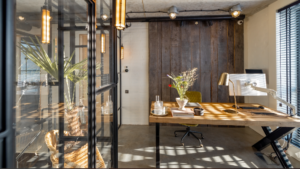 Home office with bias lighting behind monitor, smart overhead LED panel, and warm accent shelf lighting.
8. Outdoor Electrical Decoration: Kerb Appeal & Garden Ambiance
Outdoor electrical decoration extends your living space beyond your walls and significantly increases kerb appeal. From pathway lighting to pergola string lights and architectural facade illumination, outdoor electrical design is one of the most high-impact renovation investments you can make.
Pathway & Driveway Lighting
Solar-powered or hardwired LED path lights guide visitors safely while defining the landscaping. Stake-mounted fixtures spaced 6–8 feet apart along driveways and garden paths create an inviting, resort-like approach to your home.
String Lights & Festoon Lighting
Outdoor festoon (bulb string) lights strung between trees, across a pergola, or along a fence create an instantly magical outdoor entertaining space. Use weatherproof IP44-rated LED festoon sets for permanent installations.
Uplighting Trees & Architecture
Ground-mounted spotlights aimed upward at trees, columns, or the home’s exterior facade create dramatic nighttime kerb appeal. Brass or stainless steel spike spotlights with GU10 LED lamps are durable, energy-efficient, and effective.
Deck & Patio Recessed Step Lights
Flush-mounted LED step lights in deck risers, retaining walls, or patio edges provide safety and create beautiful pools of low-level light. They need to be IP67 rated and UV-stable for outdoor use.
Outdoor Security Lighting with PIR Sensors
Motion-activated floodlights serve a dual purpose: security and convenience. Modern LED PIR floodlights consume 10–15W (compared to 500W halogen equivalents) while providing equal or better illumination.
9. Staircase & Hallway Lighting: Safety Meets Style
Staircase and hallway lighting is both a safety necessity and a significant decorative opportunity. Well-lit stairs reduce fall risk one of the leading causes of home injury while great hallway lighting creates a memorable first impression when you enter your home.
LED Step Riser Lighting
Recessed LED lights in each stair riser create a stunning visual effect and ensure every step is safely illuminated at night. Use motion sensors so they activate automatically when someone approaches the stairs.
Pendant Light Cascades in Stairwells
In homes with double-height stairwells, a cascade of pendant lights at varying heights creates a dramatic, gallery-like installation. This works beautifully in both modern and traditional interiors.
Handrail LED Lighting
LED strips integrated into or beneath stair handrails provide subtle, continuous illumination along the entire staircase without requiring ceiling fixtures. A popular detail in contemporary architecture and high-end residential renovation.
10. Smart Home & Automated Lighting Systems
Smart lighting is no longer a luxury reserved for tech enthusiasts it’s rapidly becoming standard in new and renovated homes across the US, UK, Canada, Australia, and Europe. The global smart home lighting market is projected to reach $32.4 billion by 2027.
Popular Smart Lighting Ecosystems
| System | Best For | Smart Home Integration | Price Range |
|---|---|---|---|
| Philips Hue | Whole-home colour lighting | Alexa, Google, Apple HomeKit, Matter | $$–$$$ |
| Lutron Caseta | Dimmer switches & shades | Alexa, Google, Apple HomeKit | $$–$$$ |
| LIFX | Wi-Fi direct (no hub) | Alexa, Google, Apple HomeKit | $$ |
| Nanoleaf | Feature wall panels | Alexa, Google, Apple HomeKit, Thread | $$$ |
| Govee | Budget LED strips & bias | Alexa, Google | $ |
| Kasa (TP-Link) | Budget smart bulbs & plugs | Alexa, Google | $ |
Scene & Schedule Automation
The real power of smart lighting is automation. Programme your lights to gradually brighten at 7:00 AM, switch to cooler temperatures at 9:00 AM for focus, warm back down at 6:00 PM, and dim to a “movie mode” at 8:00 PM — all without touching a switch.
Voice Control Integration
All major smart lighting ecosystems integrate with Amazon Alexa, Google Assistant, and Apple Siri. Simply say “Hey Google, set living room to 40%” or “Alexa, turn on movie mode” for hands-free control of every light in your home.
11. Decorative Switches, Outlets & Electrical Panels
Standard white plastic switch plates and outlets are among the most overlooked elements in home decoration — and one of the cheapest to upgrade. Swapping out standard switch plates for designer covers is a fast, DIY-friendly weekend project that has an outsized visual impact.
Switch Plate Styles & Materials
- Brushed brass / antique brass: Perfect for traditional, farmhouse, Art Deco, and warm contemporary interiors.
- Matte black: A modern, industrial choice that works beautifully with dark or white walls.
- Polished chrome / nickel: Clean, contemporary, and works well in kitchens and bathrooms.
- White gloss / textured: Minimalist, Scandi, and modern farmhouse styles.
- Marble effect & stone finish: A luxury detail, often used in bathrooms and feature walls.
- Wooden: Reclaimed wood or engineered wood switch plates for rustic or Japandi-style interiors.
Smart Switch Upgrades
Replacing standard switches with smart dimmers (Lutron, Leviton, Kasa) not only adds smart home functionality but allows you to upgrade the switch aesthetics at the same time. Most smart switches come in a range of finishes.
USB & USB-C Outlets
Replacing standard power outlets with combination USB/USB-C and standard outlet units eliminates the need for plug-in adapters while keeping surfaces clean. These are especially useful in bedrooms, kitchens, and home offices.
12. LED Strip Lighting: The Complete Home Decoration Guide
LED strip lights (also called LED tape, ribbon lights, or flex strips) are the most versatile tool in the electrical home decoration toolkit. They can be installed almost anywhere, are available in dozens of colour temperatures and colour-changing variants, and can be cut and connected to fit any space.
Types of LED Strips
| Type | Best Use | Brightness | Notes |
|---|---|---|---|
| Single Colour (White) | Coves, under cabinets, stairs | Medium–High | Choose 2700K–6500K |
| Tunable White (CCT) | Offices, kitchens, living rooms | High | Adjustable colour temp |
| RGB | Entertainment, gaming, accent | Medium | 16M colours |
| RGBW / RGBWW | Living rooms, bedrooms | High | RGB + dedicated white channel |
| COB (Chip-on-Board) | High-end coves & furniture | Very High | Dotless, even glow |
| Neon Flex | Signs, art installations | Medium | Soft, neon-like appearance |
Where to Install LED Strips
- Tray ceiling coves (ambient and decorative)
- Under kitchen cabinets (task lighting)
- Behind TV and monitors (bias lighting)
- Beneath bed frames (night lighting)
- Under bathroom vanity units
- Inside wardrobes and bookcases
- Along stair risers and handrails
- Behind headboards
- Outdoor under pergolas (IP65+ rated strips only)
- Around mirrors and artwork
Installation Tips
- Always use aluminium channel profiles for LED strips they diffuse light evenly, protect the strip, and act as heatsinks to extend lifespan.
- For cove lighting, install strips facing the ceiling or wall never pointing directly at the viewer.
- Use a quality, correctly rated power supply (driver) never underpower LED strips.
- Connect strips to smart controllers (Gledopto, Wled-compatible controllers) for smart home integration without buying brand-specific strips.
LED Strip Cove Lighting Detail
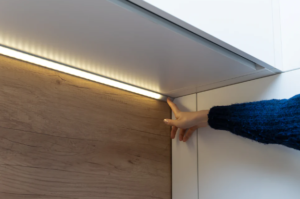
Close-up of warm white COB LED strip installed in an aluminium channel in a ceiling cove, creating an even, dotless glow.
13. Cost Guide by Country: Budget Planning for Electrical Home Decoration
| Project | 🇺🇸 USA | 🇬🇧 UK | 🇨🇦 Canada | 🇦🇺 Australia | 🇪🇺 Europe (avg) |
|---|---|---|---|---|---|
| LED Downlight (per light, installed) | $80–150 | £60–120 | $100–180 CAD | $100–200 AUD | €70–140 |
| LED Strip (per metre, installed) | $15–40 | £12–35 | $20–50 CAD | $25–55 AUD | €15–45 |
| Smart Dimmer Switch (installed) | $80–200 | £60–150 | $100–250 CAD | $120–280 AUD | €80–180 |
| Statement Pendant (fixture + install) | $200–800+ | £150–600+ | $250–1000 CAD | $300–1200 AUD | €180–750+ |
| Outdoor Path Lights (set of 6, installed) | $300–600 | £250–500 | $400–800 CAD | $450–900 AUD | €300–700 |
| Full Room LED Lighting Upgrade | $800–3,500 | £600–2,800 | $1,000–4,500 CAD | $1,200–5,000 AUD | €800–3,500 |
Note: Costs include materials and licensed electrician labour. DIY supply-only costs are typically 40–60% lower. Always get 3 quotes from licensed electricians in your area.
14. DIY vs Professional Installation: Honest Comparison
✅ DIY Pros
- Lower cost (save 40–60%)
- Flexibility of timing
- Great for plug-in/low-voltage LED strips
- Smart bulb swaps are instant
- Switch plate upgrades are simple
❌ DIY Cons
- Mains wiring requires a licensed electrician
- Mistakes can cause fire or electrocution
- Void insurance without permits
- Complex circuits are not DIY territory
- May not pass building inspections
✅ Professional Pros
- Safe, code-compliant work
- Proper load calculations
- Permits and inspections handled
- Warranty on workmanship
- Complex multi-room systems done right
❌ Professional Cons
- Higher upfront cost
- Scheduling around tradespeople
- Scope can expand (hidden issues)
If it plugs in → DIY is fine. If it involves a switch, socket, new circuit, or anything in the consumer unit / breaker panel → hire a licensed electrician every time.
15. Electrical Safety & Code Compliance
Beautiful electrical home decoration must always be underpinned by safe, code-compliant installation. Electrical fires account for approximately 51,000 home fires annually in the United States (NFPA data), causing $1.3 billion in property damage. The majority are preventable.
Key Safety Standards by Country
- USA: National Electrical Code (NEC), enforced by local AHJ (Authority Having Jurisdiction). AFCI and GFCI protection required in most living areas.
- UK: BS 7671 (18th Edition Wiring Regulations), Part P Building Regulations. Notifiable electrical work must be certified.
- Canada: Canadian Electrical Code (CEC). Provincial licensing requirements for electricians.
- Australia: AS/NZS 3000 Wiring Rules. All electrical work except low-voltage (ELV) must be done by a licensed electrician.
- EU: Each country follows national standards based on IEC 60364. CE marking required for all electrical fittings.
Essential Safety Best Practices
- Always turn off the circuit at the breaker panel before working on any switch, outlet, or fixture.
- Use a non-contact voltage tester before touching any wire.
- Never overload circuits each circuit has a maximum load capacity.
- Install GFCI/RCD protection in bathrooms, kitchens, and outdoor areas.
- Use outdoor-rated (IP44+) fixtures and cable for any exterior installations.
- Secure all LED driver power supplies in ventilated, accessible locations.
“The number one mistake homeowners make is treating decorative electrical upgrades as purely aesthetic decisions. Every choice from the wattage of a strip light to the load on a dimmer switch has a technical specification that must be matched correctly. A 60W-rated dimmer loaded with 200W of LED strips will fail, often dangerously. Consult a licensed electrician for any installation beyond simple bulb and plug-in product swaps.”
16. 2026 Trends in Electrical Home Decoration
1. Biophilic Lighting Design
Lighting that mimics natural daylight cycles varying colour temperature and intensity throughout the day is the dominant trend in 2026. Tunable white LED systems and circadian-aware smart bulbs are now mainstream, supported by growing research linking artificial light quality to sleep, mood, and productivity.
2. Minimalist Invisible Lighting
The “invisible fixture” trend continues: COB LED strips in aluminium extrusions built into ceilings, walls, and furniture create light without any visible hardware. The light appears to emanate from the architecture itself.
3. Statement Sculptural Fixtures
At the opposite end of the spectrum, large-scale sculptural pendant lights and chandeliers made from hand-blown glass, ceramic, recycled materials, and organic forms are increasingly centrepieces of interior design rather than functional additions.
4. Matter Protocol & Unified Smart Home
The Matter smart home protocol (supported by Apple, Google, Amazon, and Samsung) is creating a unified ecosystem where lighting from any brand works seamlessly with any platform. This is accelerating smart lighting adoption across all market segments in 2026.
5. Neon & LED Neon Art Installations
Custom LED neon signs featuring quotes, shapes, and abstract forms continue to be popular as focal wall features in living rooms, bedrooms, and home bars. Modern LED neon flex is safer, lower energy, and more flexible than traditional glass neon.
6. Exterior Architectural Lighting
Homeowners are increasingly investing in facade and landscape lighting to create dramatic curb appeal. Ground-mounted uplight spots, soffit downlights, and illuminated house numbers make homes look striking after dark.
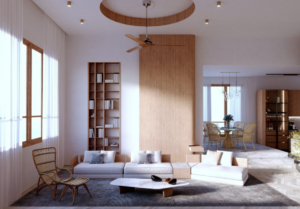
Modern living room with tunable white LED ceiling system and natural materials, demonstrating biophilic lighting design.
17. Common Electrical Decoration Mistakes to Avoid
- One light source per room: The single central ceiling light is the most common and most limiting lighting mistake. Layer your lighting.
- Wrong colour temperature: Cool white (5000K+) in bedrooms and living rooms creates an institutional feel. Use warm (2700K–3000K) for relaxing spaces.
- No dimmer switches: Fixed-brightness lighting eliminates flexibility and atmosphere. Install dimmers in every living space.
- Undersized chandeliers: A too-small chandelier looks lost and fails as a focal point. Use the room dimension formula.
- Ignoring IP ratings outdoors: Standard indoor fixtures in outdoor or wet locations are a fire and shock hazard.
- Cheap LED strips without aluminium channels: Bare LED strips fade faster, show hot spots, and look cheap without diffuser channels.
- Not planning for switches: Ensure every light is accessible from a convenient switch location before installation.
- Ignoring CRI: Low CRI (below 80) LEDs make colours look dull and inaccurate. Choose 90+ CRI for living areas and kitchens.
- DIY mains wiring: Always hire a licensed electrician for any 110V/230V work.
- Not using smart controls: Even in non-smart-home setups, a simple smart dimmer pays for itself in convenience and energy savings within months.
❓ Frequently Asked Questions (FAQ)
(1) layer all three types of lighting in every room;
(2) install dimmers on every circuit;
(3) add cove or indirect ceiling lighting;
(4) use warm white 2700K lighting throughout;
(5) eliminate bare LED strip hotspots with aluminium diffuser channels;
(6) add bedside sconces instead of table lamps.The combination creates the signature warm, layered quality of five-star hotel interiors.
Conclusion: Transform Your Home with Electrical Decoration
Electricity home decoration is not about more light it’s about the right light, in the right place, at the right intensity, in the right colour temperature. From the warm glow of a living room cove to the precision task lighting in a kitchen, from smart automated scenes that shift with your day to a stunning sculptural pendant that anchors a dining room electrical decoration is the invisible architecture that makes a home feel finished, intentional, and uniquely yours.
Start with the fundamentals: layer your lighting in every room, install dimmers everywhere, and switch to warm white LEDs throughout. Then build upward: add smart controls, upgrade your switch plates, install LED strips in coves and cabinets, and invest in a statement fixture or two. Do each stage safely hiring a licensed electrician for any mains-voltage work and the result will be a home that looks, feels, and functions at a level far beyond what most renovation budgets would suggest.
The single best investment? A licensed electrician for a full lighting design consultation. An hour of professional advice before you buy a single fitting can save thousands in mistakes and ensure you create a lighting scheme you’ll love for decades.
3 thoughts on “Electricity Home Decoration: 50+ Brilliant Ideas to Transform Every Room in 2026”