Electrical Materials: A Complete Guide
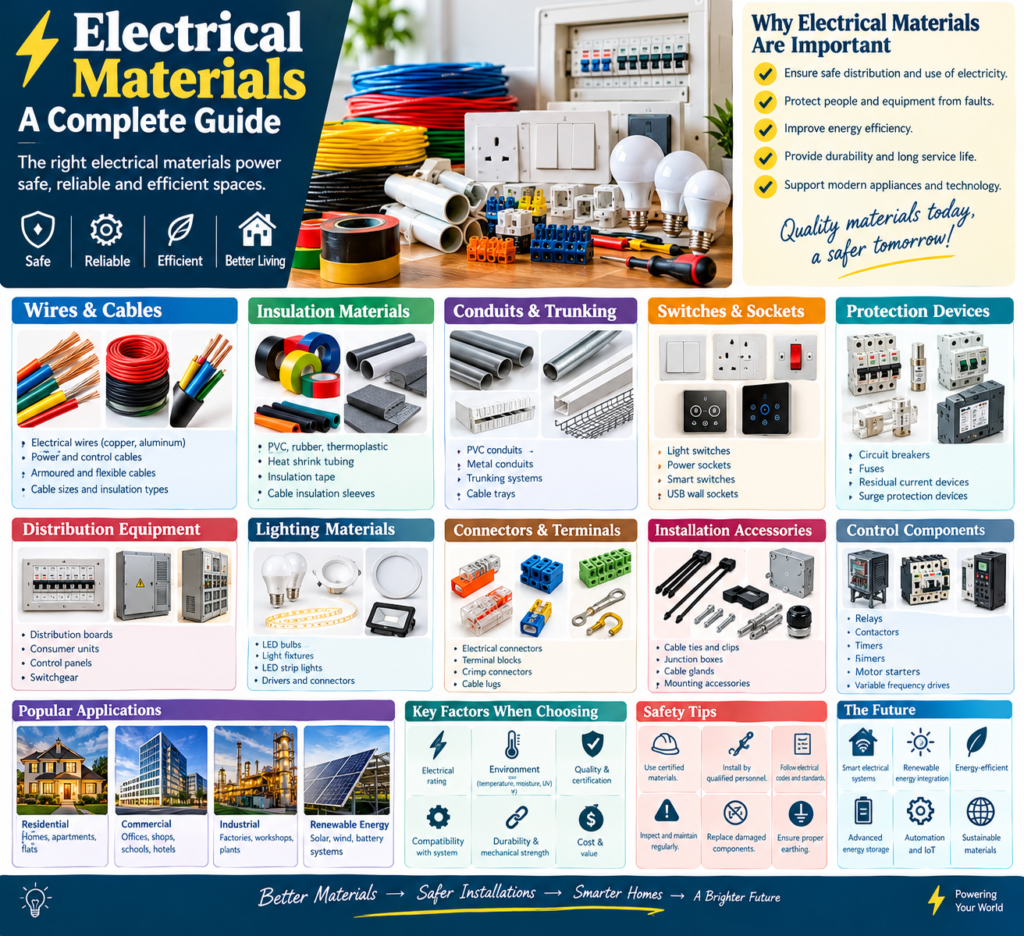
Electrical materials are essential components used to generate, distribute, control, protect, and utilize electrical energy in homes, offices, commercial buildings, industrial facilities, and infrastructure projects. Although many electrical materials are small and often hidden behind walls, ceilings, floors, and equipment, they play a critical role in making modern buildings functional, comfortable, safe, and efficient.
From electrical wires and cables to switches, sockets, circuit breakers, conduits, junction boxes, distribution boards, connectors, and lighting components, each material has a specific purpose. Choosing appropriate materials is important because the quality and suitability of electrical components can influence the safety, reliability, efficiency, and lifespan of an electrical installation.
A good electrical system is not simply a collection of wires and devices. It is a carefully planned combination of materials that work together to transport electricity safely and efficiently. The materials must be appropriate for the electrical load, installation environment, temperature, moisture conditions, mechanical demands, and applicable electrical standards.
This complete guide explores the major types of electrical materials, their functions, applications, selection considerations, installation principles, maintenance, safety, and the role they play in modern buildings.
What Are Electrical Materials?
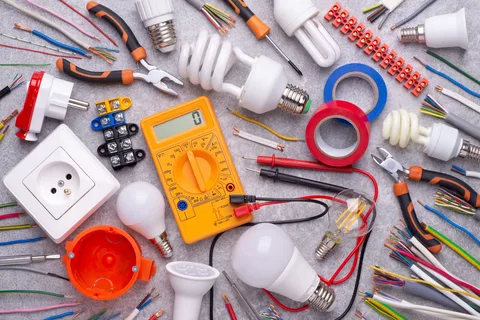
Electrical materials are products and components used in electrical installations and systems. They can be used to conduct electricity, insulate electrical parts, control electrical current, protect circuits, connect components, distribute power, provide lighting, or support electrical equipment.
Electrical materials range from basic items such as electrical wire and insulation tape to sophisticated components such as circuit protection devices, control equipment, smart switches, and energy-management systems.
They are used in almost every environment where electricity is generated or consumed. Residential buildings require electrical materials for lighting, appliances, sockets, fans, air-conditioning systems, and other equipment. Commercial buildings require materials for lighting systems, power distribution, communication equipment, and building services. Industrial facilities often require specialized components capable of handling larger electrical loads and demanding operating conditions.
Because electrical materials perform different functions, understanding their characteristics is important when designing or maintaining an electrical system.
Why Electrical Materials Are Important
Electricity is extremely useful, but it must be controlled carefully. Electrical materials provide the physical means of moving, controlling, and protecting electrical energy.
Electrical cables provide pathways for current. Insulation prevents unintended contact between conductors and surrounding materials. Switches allow users to control circuits. Sockets provide connection points for electrical equipment. Circuit breakers and other protective devices help disconnect circuits when abnormal electrical conditions occur.
Without suitable materials, electrical systems could become unreliable or unsafe.
Good electrical materials can also contribute to energy efficiency. Properly sized conductors can reduce unnecessary losses, while efficient lighting components can reduce electricity consumption. Quality connections can improve reliability and reduce problems associated with loose or poorly made connections.
For these reasons, electrical materials should be viewed as essential parts of a building rather than simple construction accessories.
Main Categories of Electrical Materials
Electrical materials can be divided into several broad categories. These include conductors, cables, insulation materials, wiring accessories, protection devices, distribution equipment, lighting components, installation accessories, control components, and specialized energy equipment.
Each category performs a different role.
Conductors carry electrical current. Insulators prevent current from flowing where it should not. Wiring accessories provide convenient connection and control points. Protection devices help protect people, circuits, and equipment from electrical faults. Distribution equipment manages the movement of electricity throughout a building.
Understanding these categories makes it easier to select the correct materials for a particular project.
Electrical Wires
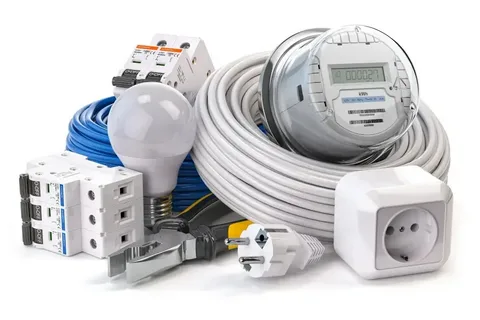
Electrical wires are among the most basic and important electrical materials. A wire generally consists of a conductive material surrounded by insulation, depending on its application.
Copper is widely used as a conductor because it has excellent electrical conductivity and good mechanical properties. Aluminum is also used in certain applications because it is lightweight and can be economical for larger conductors.
Electrical wires are available in different sizes. The appropriate size depends on factors such as the expected current, installation method, conductor material, allowable voltage drop, ambient temperature, and applicable electrical requirements.
Using a conductor that is too small for the intended load can result in overheating and other hazards. Therefore, conductor sizing should be determined according to recognized electrical standards and the requirements of the installation.
Electrical Cables
Electrical cables are assemblies of one or more conductors protected by insulation and, depending on the cable type, additional coverings or protective layers.
Cables are available for many applications. Some are designed for indoor building wiring, while others are intended for outdoor, underground, industrial, or specialized installations.
Different cables may have different insulation systems, conductor arrangements, mechanical protection, and environmental ratings.
When selecting a cable, it is important to consider where and how it will be installed. A cable intended for a dry indoor environment may not be appropriate for exposure to moisture, chemicals, sunlight, mechanical stress, or extreme temperatures.
Copper and Aluminum Conductors
Copper and aluminum are two important conductor materials.
Copper offers high conductivity and is widely used in building wiring and electrical equipment. It is also mechanically strong and relatively easy to terminate.
Aluminum has lower density than copper, making it considerably lighter. It can be useful for certain power distribution applications, particularly where conductor weight is an important consideration.
The choice between copper and aluminum depends on the application, required conductor size, installation method, equipment compatibility, cost, and applicable standards.
Connections involving aluminum conductors require appropriate techniques and compatible equipment because connection quality is particularly important for long-term reliability.
Electrical Insulation Materials
Insulation is critical because it separates conductors from people, structures, and other electrical components.
Common insulation materials include various forms of plastics, rubber-based materials, and other engineered compounds.
The insulation must be appropriate for the voltage, temperature, mechanical conditions, and environmental exposure associated with the installation.
Damaged insulation can expose conductors and create a risk of short circuits, electric shock, or fire. For this reason, electrical cables should be handled carefully during installation and inspected when appropriate.
Electrical Conduits
Electrical conduits are protective pathways used to contain and protect electrical wires and cables.
Conduits can be made from materials such as PVC or metal. The appropriate choice depends on the installation environment and applicable requirements.
PVC conduit is lightweight, corrosion-resistant, and widely used in many building applications. Metal conduit can provide strong mechanical protection and may be appropriate in environments where greater physical protection is required.
Conduits also make wiring installations more organized and can provide a defined route for cables.
Electrical Trunking
Electrical trunking is another method of organizing and protecting cables. It is commonly used in commercial buildings, offices, workshops, and other installations where multiple cables need to be routed together.
Trunking can make electrical systems easier to organize and maintain. It can also help protect cables from accidental damage.
Different sizes and designs are available depending on the number of cables and the installation requirements.
Cable Trays
Cable trays are support systems used to carry electrical cables. They are commonly found in commercial, industrial, and infrastructure installations.
They provide organized routes for groups of cables and can make inspection and maintenance easier.
Cable trays may be made from metal or other suitable materials. Their design and installation must take into account cable weight, environmental conditions, mechanical requirements, and applicable standards.
Electrical Junction Boxes
Junction boxes provide protected locations where electrical conductors can be connected or where circuits can branch into different directions.
They help protect electrical connections from accidental contact and environmental exposure.
Junction boxes are available in different materials, shapes, and sizes. The correct size should provide sufficient space for the conductors and connections contained inside.
Connections should be properly made and accessible where required by the applicable installation rules.
Electrical Switches
Switches allow users to control electrical circuits. They are commonly used to turn lights and other equipment on or off.
There are many types of switches, including single-pole, double-pole, intermediate, dimmer, push-button, touch-sensitive, and smart switches.
Traditional switches are simple mechanical devices, while modern smart switches can integrate with home automation systems and allow remote or automated control.
Switches should be selected according to the electrical load, installation environment, design requirements, and compatibility with the circuit.
Electrical Sockets
Electrical sockets provide connection points for appliances and portable equipment.
Sockets are available in different configurations depending on the electrical system and regional standards.
Some modern sockets include USB charging ports, switches, surge protection, or smart features.
The socket must be compatible with the electrical system and rated appropriately for the intended application.
Plugs
Electrical plugs connect appliances and other equipment to sockets. Their design depends on the electrical system and regional plug standard.
A suitable plug should match the socket and the equipment’s electrical requirements.
Damaged plugs should not be used because exposed conductors or poor connections can create electrical hazards.
Circuit Breakers
Circuit breakers are protective devices designed to interrupt electrical circuits under specified abnormal conditions, such as excessive current.
They are commonly installed in distribution boards and electrical panels.
Different circuit breaker types are designed for different applications. Their ratings and characteristics must be selected according to the circuit design and applicable standards.
Circuit breakers are important because they can help prevent excessive current from damaging conductors and equipment.
Fuses
Fuses are protective devices containing a conductor designed to melt when excessive current passes through it.
When a fuse operates, the circuit is interrupted and the fuse generally needs to be replaced.
Fuses remain useful in many electrical and electronic applications, although circuit breakers are often preferred for building distribution because they can be reset after operation.
Residual Current Protection
Residual current protection devices are designed to detect certain leakage conditions and disconnect a circuit when the detected current exceeds a specified threshold.
These devices can provide important protection against electric shock and certain electrical faults.
They are particularly valuable in installations where people may come into contact with electrical equipment or where electrical systems operate in environments with increased exposure to moisture.
Surge Protection Devices
Electrical equipment can be affected by sudden voltage disturbances. Surge protection devices can help protect electrical systems and connected equipment from certain transient overvoltage events.
They are particularly useful where sensitive electronic equipment is installed or where electrical systems may be exposed to lightning-related or switching transients.
A complete protection strategy should be designed according to the characteristics of the building and electrical installation.
Distribution Boards
A distribution board is a central point where electrical circuits are distributed and protected.
It commonly contains circuit breakers or other protective devices. Separate circuits may be provided for lighting, sockets, air-conditioning systems, water heaters, kitchen equipment, and other major loads.
A properly organized distribution board makes an electrical installation easier to inspect, operate, and maintain.
Clear circuit identification is also important because it allows users and technicians to understand which protective device controls each circuit.
Electrical Panels
Electrical panels are used to house and organize electrical control and protection equipment.
They are common in commercial and industrial environments and can range from relatively simple distribution panels to complex control systems.
Panels may contain circuit breakers, contactors, relays, meters, control equipment, and other components.
Panel design should provide adequate space, ventilation where required, protection from environmental conditions, and safe access for authorized personnel.
Electrical Connectors
Connectors are used to join electrical conductors or connect cables to electrical equipment.
There are many types, including terminal connectors, crimp connectors, screw terminals, and specialized connectors.
A good electrical connection should provide appropriate mechanical strength and electrical conductivity.
Poor connections can create resistance and heat, potentially causing failures or damage. Therefore, correct connector selection and installation are essential.
Terminal Blocks
Terminal blocks provide organized connection points for electrical conductors.
They are commonly used in control panels, distribution systems, machinery, and other electrical equipment.
Terminal blocks make it easier to connect, disconnect, identify, and maintain circuits.
They are available in different configurations and ratings according to the application.
Electrical Tapes
Electrical tape is commonly used for insulation, identification, bundling, and minor electrical installation tasks where appropriate.
Different tapes have different properties, including temperature resistance, flexibility, adhesive strength, and insulation characteristics.
Electrical tape should not be considered a substitute for properly repairing severely damaged cables or making unsafe electrical connections.
Cable Ties and Cable Clips
Cable ties and clips are simple but useful installation accessories. They help organize cables and keep them secured along their intended routes.
Good cable management improves the appearance of installations and can make inspection and maintenance easier.
Cable management materials should not be installed in a way that damages the cable insulation or creates excessive pressure on conductors.
Lighting Materials
Lighting is another major area of electrical materials. Components can include lamps, LED bulbs, fixtures, drivers, switches, connectors, and control systems.
LED lighting has become widely popular because it can provide efficient illumination and long service life compared with many older lighting technologies.
Lighting fixtures are available in many designs, including recessed lights, pendant fixtures, wall lights, ceiling fixtures, track lighting, outdoor lights, and decorative systems.
The appropriate lighting material depends on the purpose of the room, required brightness, environmental conditions, energy goals, and aesthetic preferences.
LED Bulbs
LED bulbs are commonly used in residential, commercial, and industrial lighting applications.
They are available in different shapes, brightness levels, color temperatures, and base configurations.
Warm white light can create a comfortable atmosphere, while cooler light may be preferred for certain work areas.
LED bulbs can be used in general lighting, accent lighting, task lighting, outdoor applications, and decorative fixtures.
LED Strip Lighting
LED strip lights consist of small LED sources mounted along a flexible strip.
They can be used for accent lighting, under-cabinet lighting, architectural features, display areas, and decorative applications.
Depending on the product, LED strips may support different brightness levels, colors, and control methods.
Proper power supplies and installation methods are important to ensure reliable operation.
Electrical Transformers
Transformers are electrical devices used to change voltage levels in alternating-current systems.
They are important in electrical power distribution because electricity may need to be transmitted and distributed at different voltage levels.
Transformers can be found in utility networks, industrial facilities, commercial buildings, electronic equipment, and specialized systems.
Their size and design depend on the required power rating and application.
Relays
Relays are electrically operated switching devices. They allow one circuit to control another circuit.
They are commonly used in control systems, automation, machinery, building services, and electrical protection applications.
Relays are available in several forms, including electromagnetic and solid-state designs.
Contactors
Contactors are switching devices commonly used for controlling larger electrical loads such as motors, heating equipment, and certain lighting systems.
They allow control circuits to operate power circuits.
Contactors are particularly common in industrial and commercial electrical systems.
Electrical Motors and Starting Components
Electrical motors convert electrical energy into mechanical energy. Although motors themselves are electrical equipment rather than simple installation materials, various associated electrical materials are required for their operation.
These can include motor starters, contactors, overload protection, cables, switches, relays, and control devices.
Proper motor protection and control are important because motors can draw significant current, particularly during starting.
Solar Electrical Materials
The growth of solar energy has expanded the range of electrical materials used in renewable energy systems.
Solar installations can include photovoltaic modules, solar cables, connectors, combiner equipment, inverters, isolators, batteries, charge controllers, protective devices, and mounting-related electrical components.
Each component must be selected to work with the others and should be installed according to applicable requirements.
Solar electrical systems also require appropriate protection against overcurrent, isolation requirements, environmental exposure, and other potential hazards.
Batteries and Energy Storage
Batteries store electrical energy for later use. They are used in backup power systems, solar installations, vehicles, emergency systems, telecommunications, and many other applications.
Different battery technologies have different characteristics relating to capacity, charging requirements, lifespan, temperature tolerance, and maintenance.
Battery systems require appropriate protection, ventilation where necessary, and correctly rated electrical connections.
Inverters
Inverters convert electrical energy from one form to another, commonly converting direct current into alternating current.
They are important components in solar energy systems and backup power installations.
An inverter must be selected according to the electrical load, input voltage, output requirements, operating environment, and system configuration.
Smart Electrical Materials
Modern homes increasingly use smart electrical components. Smart switches, smart plugs, sensors, energy monitors, and automated lighting systems can provide additional convenience and control.
Some smart devices can be operated through mobile applications, voice assistants, schedules, or automation routines.
Smart electrical materials can also help users monitor energy consumption and control devices more efficiently.
Choosing the Right Electrical Materials
Selecting electrical materials requires more than choosing products based on appearance or price.
The electrical rating should always be considered. Materials must be capable of handling the expected voltage and current.
Environmental conditions are also important. A component used outdoors may need protection from moisture, sunlight, temperature changes, and physical impact.
Mechanical requirements should also be considered. Cables and accessories installed in areas exposed to movement or impact may require additional protection.
Compatibility is another major consideration. Electrical components should work together and conform to the requirements of the electrical system.
Quality and Standards
Quality is particularly important when purchasing electrical materials. Products should come from reputable manufacturers and meet relevant safety and performance requirements.
Depending on the location and application, different national or international standards may apply.
Certified or compliant products provide greater confidence that the materials have been designed and tested for their intended purpose.
Cheap materials may initially reduce project costs, but poor-quality components can result in premature failure, maintenance problems, or safety risks.
Electrical Materials for New Homes
A new home typically requires a wide range of electrical materials.
These may include service equipment, cables, conduits, junction boxes, switches, sockets, lighting fixtures, distribution boards, circuit breakers, protective devices, grounding components, and accessories.
The installation should be designed before materials are purchased. This helps determine the number and size of circuits, cable requirements, outlet locations, lighting points, and protection devices.
Planning also helps reduce unnecessary waste and ensures that materials are compatible.
Electrical Materials for Renovations
Renovation projects often require special attention because existing wiring and electrical equipment may be old, damaged, overloaded, or incompatible with new requirements.
Before adding new electrical loads, the existing system should be evaluated by a qualified professional.
Renovation materials may include replacement cables, sockets, switches, protective devices, distribution equipment, lighting fixtures, and cable management products.
Updating electrical materials can improve safety and support modern appliances and technology.
Electrical Materials for Commercial Buildings
Commercial buildings often have more complex electrical systems than ordinary homes.
Offices, shops, schools, hotels, and other facilities may require larger distribution systems, emergency lighting, specialized power circuits, data-related infrastructure, backup systems, and advanced control equipment.
Reliability is particularly important because electrical failures can interrupt business operations.
Proper labeling, maintenance access, and organized distribution systems can make commercial installations easier to manage.
Electrical Materials for Industrial Facilities
Industrial environments can place demanding requirements on electrical materials.
Components may be exposed to heat, vibration, dust, chemicals, moisture, mechanical impact, or continuous operation.
Industrial electrical materials may include heavy-duty cables, cable trays, industrial connectors, switchgear, contactors, relays, control panels, motor-control equipment, transformers, and specialized protection devices.
The selection process should consider the operating environment and the specific characteristics of industrial equipment.
Electrical Safety
Electrical safety should always be a priority when working with electrical materials.
Electricity can cause shock, burns, equipment damage, and fires. Therefore, electrical installation and repair work should be performed by appropriately qualified personnel.
Circuits should be isolated before work begins when appropriate, and suitable testing procedures should be followed.
Damaged electrical materials should be replaced or professionally repaired rather than ignored.
Overloaded sockets, damaged cables, exposed conductors, loose connections, and unsuitable extension equipment should be treated seriously.
Importance of Proper Installation
Even high-quality electrical materials can become unsafe if they are installed incorrectly.
Conductors should be appropriately sized and routed. Connections should be properly terminated. Protective devices should be correctly rated. Equipment should be securely mounted.
Cable management should prevent unnecessary bending, crushing, abrasion, or exposure to conditions beyond the material’s rating.
Installation should follow applicable electrical codes, manufacturer instructions, and professional practices.
Maintenance of Electrical Materials
Regular inspection and maintenance can help identify problems before they become serious.
Visible cables should be checked for damage. Switches and sockets showing signs of burning, cracking, looseness, or unusual heat should be investigated.
Distribution boards and electrical panels should be inspected by qualified personnel as required.
Outdoor electrical materials may require additional attention because exposure to weather can accelerate deterioration.
Maintenance schedules should be based on the type of installation, environment, equipment, and applicable requirements.
Common Problems With Electrical Materials
Electrical materials can experience several types of problems.
Loose connections may create heat and intermittent operation. Damaged insulation can expose conductors. Overloaded circuits can cause protective devices to operate frequently.
Corrosion can affect electrical connections in damp or aggressive environments.
Physical damage can occur when cables are crushed, cut, stretched, or exposed to excessive movement.
Using inappropriate materials can also cause compatibility problems.
Early detection is important because small electrical problems can sometimes develop into more serious failures.
Energy Efficiency and Electrical Materials
Electrical materials can contribute to energy efficiency.
Efficient lighting, appropriate conductors, effective controls, and energy-monitoring devices can help reduce unnecessary energy consumption.
LED lighting is a common example of a technology that can reduce energy use compared with less efficient lighting technologies.
Smart controls can also allow lighting and equipment to operate only when needed.
However, energy efficiency should never come at the expense of safety. Electrical materials must still be correctly rated and installed.
The Future of Electrical Materials
Electrical materials continue to evolve as buildings become smarter, more connected, and more energy efficient.
Smart electrical devices, renewable energy systems, battery storage, electric vehicle charging equipment, advanced lighting controls, and energy-monitoring technologies are becoming increasingly important.
Future electrical installations are likely to place greater emphasis on efficiency, automation, flexibility, and integration.
At the same time, fundamental materials such as conductors, insulation, connectors, protection devices, and distribution equipment will remain essential.
Conclusion
Electrical materials are the foundation of safe and reliable electrical systems. From simple wires and switches to advanced distribution equipment, smart devices, solar components, and energy-storage systems, each material performs an important role.
Choosing the correct electrical material requires careful consideration of electrical ratings, environmental conditions, compatibility, durability, installation methods, quality, and applicable standards.
Electrical wires and cables provide pathways for current, while insulation protects conductors from unwanted contact. Conduits, trunking, and cable trays provide organization and mechanical protection. Switches and sockets make electrical systems accessible to users, while circuit breakers, fuses, residual current protection, and surge protection devices help protect circuits and equipment.
Distribution boards and panels organize electrical circuits, while connectors and terminal blocks create reliable electrical connections. Lighting materials provide illumination, and modern technologies such as LED lighting and smart controls can improve efficiency and convenience.
Renewable energy has also expanded the role of electrical materials. Solar panels, inverters, batteries, protective devices, and specialized cables are now important components of many energy systems.
Whether used in a home, office, commercial building, factory, workshop, or renewable-energy installation, electrical materials should be selected and installed carefully. Quality products, professional installation, regular maintenance, and appropriate protection are essential for achieving a safe and dependable electrical system.
Ultimately, electrical materials may not always be visible once a building is completed, but their importance cannot be underestimated. They form the infrastructure that allows modern lighting, appliances, machinery, communication systems, heating and cooling equipment, renewable energy, and countless other technologies to operate.
A well-designed electrical installation begins with the right materials. By understanding the different types of electrical materials and their applications, homeowners, builders, designers, and professionals can make better decisions and create electrical systems that are safer, more reliable, efficient, and prepared for the changing needs of modern life.
For more info check out our main website here http://ezhomeaura.com