Decorative Mirrors: A Complete Guide to Stylish and Functional Home Décor
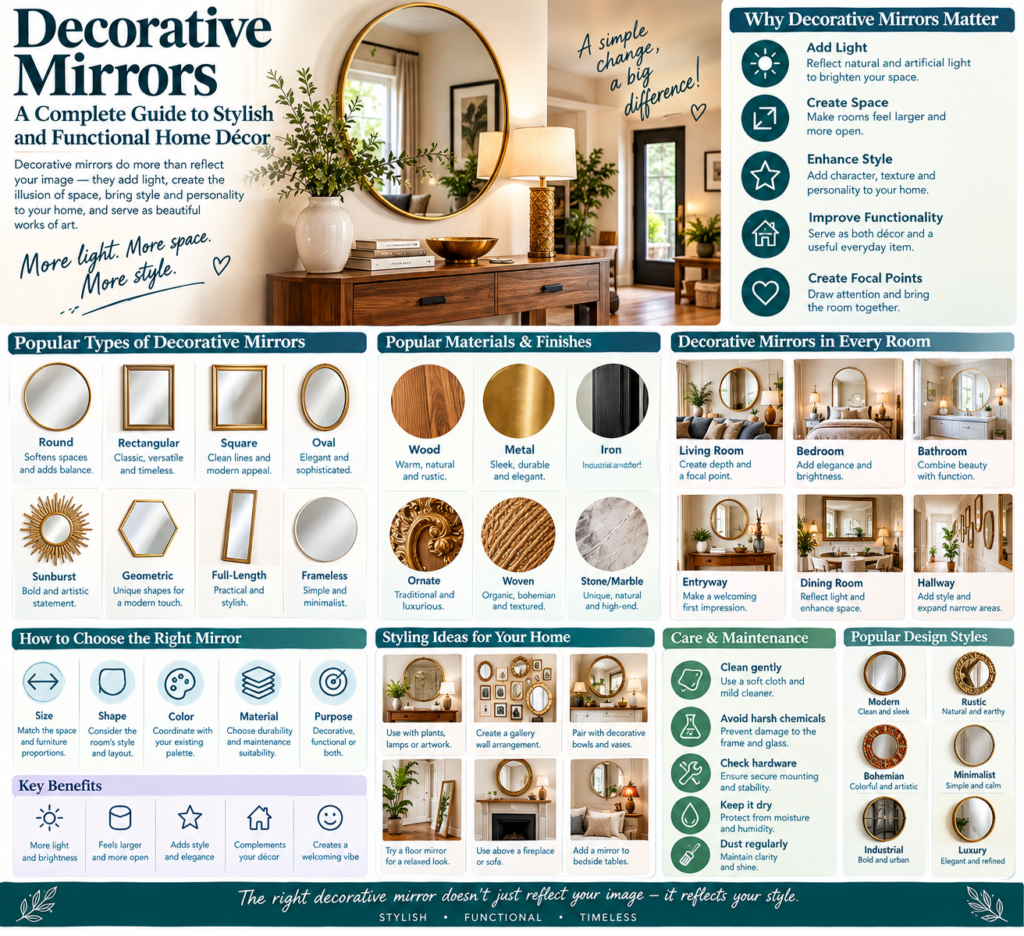
Decorative mirrors are among the most versatile accessories used in modern home décor. They combine practical functionality with visual beauty, making them useful in almost every room of a home. While mirrors are traditionally used to reflect images, decorative mirrors go beyond this basic purpose by adding style, character, light, depth, and personality to an interior space. A carefully selected mirror can become a focal point on a wall, make a small room appear larger, brighten a dark corner, or bring together different elements of a room’s design.
Homeowners often look for simple ways to refresh their living spaces without replacing major pieces of furniture. Decorative mirrors provide an excellent solution because they can create a noticeable change without requiring extensive renovations. They are available in countless shapes, sizes, colors, frames, and materials, allowing people to choose designs that complement their existing décor.
From large statement mirrors above a fireplace to small decorative mirrors arranged as a wall gallery, there are endless ways to use them. Round mirrors can soften rooms dominated by straight lines, rectangular mirrors can create a structured appearance, and unusual geometric mirrors can introduce an artistic element. Framed mirrors can also help reinforce the style of a room, whether the goal is rustic, modern, traditional, minimalist, industrial, bohemian, or luxurious.
This complete guide explores decorative mirrors, their benefits, different styles, materials, placement ideas, styling techniques, maintenance requirements, and important considerations when choosing the perfect mirror for a home.
What Are Decorative Mirrors?
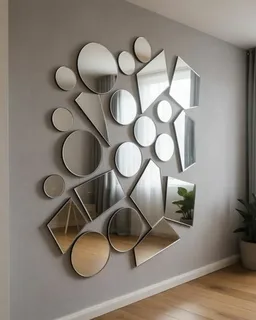
Decorative mirrors are mirrors designed not only for practical reflection but also as elements of interior decoration. They can feature artistic frames, unusual shapes, decorative edges, carved details, metallic finishes, or other design features that make them visually appealing.
Unlike a basic functional mirror that may be installed simply for checking appearance, a decorative mirror can serve as a piece of wall art. It can become one of the main visual features in a room while still performing its practical purpose.
Decorative mirrors can be mounted on walls, leaned against furniture, incorporated into cabinets, or grouped together as part of a larger display. Their flexibility makes them suitable for living rooms, bedrooms, bathrooms, hallways, dining areas, entryways, home offices, and even outdoor covered spaces.
Because mirrors reflect both people and their surroundings, they also interact with lighting, furniture, artwork, and architectural features. This makes them particularly powerful tools in interior design.
Why Decorative Mirrors Are Important in Home Décor
One of the greatest benefits of decorative mirrors is their ability to make a room feel more spacious. Mirrors reflect the surrounding environment, creating the impression that a room extends beyond its physical boundaries. This can be particularly useful in small apartments, narrow hallways, compact bedrooms, and other areas where space is limited.
Mirrors can also increase the amount of perceived light in a room. When positioned opposite or near a window, a mirror can reflect natural light deeper into the space. Similarly, placing a mirror near a lamp or other light source can distribute light throughout the room.
Another major advantage is visual interest. An empty wall can sometimes look plain or unfinished. A decorative mirror can fill that space while introducing shape, texture, and contrast.
Mirrors can also help establish a room’s style. A gold-framed mirror can create a luxurious atmosphere, while a simple wooden frame can contribute to a rustic or natural interior. A frameless mirror can support a minimalist design, and an ornate mirror can complement a traditional space.
Popular Types of Decorative Mirrors
There are many different types of decorative mirrors available. Each has a distinct appearance and can be used for different purposes.
Round Decorative Mirrors
Round mirrors are extremely popular because their curved shape provides a pleasant contrast to the straight lines found in most furniture and architecture.
They work well above sofas, consoles, fireplaces, beds, bathroom vanities, and entryway tables. A large round mirror can become a strong focal point, while a collection of smaller round mirrors can create an artistic wall display.
Round mirrors are particularly effective in modern, Scandinavian, minimalist, and contemporary interiors.
Rectangular Mirrors
Rectangular mirrors are classic and versatile. Their structured shape makes them suitable for many locations.
They can be installed vertically or horizontally depending on the wall and the desired visual effect. A vertical rectangular mirror can emphasize height, while a horizontal mirror can make a wall appear wider.
Large rectangular mirrors are commonly used in bedrooms, dressing areas, bathrooms, dining rooms, and hallways.
Square Mirrors
Square mirrors provide a balanced and symmetrical appearance. They are particularly suitable for interiors that feature geometric furniture and clean architectural lines.
A single square mirror can create a simple focal point, while several square mirrors can be arranged into a grid for a contemporary wall display.
Oval Mirrors
Oval mirrors combine the softness of a curved design with the height of a vertical form. They are especially effective in bathrooms, bedrooms, entryways, and traditional interiors.
An ornate oval mirror with a detailed frame can create an elegant and classic appearance.
Geometric Mirrors
Geometric mirrors can feature hexagonal, diamond, triangular, or other unusual shapes. These mirrors are often chosen for their artistic qualities.
They are suitable for contemporary and creative interiors where homeowners want decorative accessories to make a stronger visual statement.
Sunburst Mirrors
Sunburst mirrors feature a central mirror surrounded by decorative rays or spokes. They became particularly popular in vintage and mid-century-inspired interiors but can also work in modern spaces.
A sunburst mirror can function almost like a piece of wall art and is often used above fireplaces, consoles, beds, or sofas.
Full-Length Mirrors
Full-length mirrors are primarily practical but can also be decorative. They are useful in bedrooms, dressing areas, hallways, and entryways.
A large framed full-length mirror can become an important design feature while allowing homeowners to view their complete appearance.
Decorative Mirror Frames
The frame is one of the most important design elements of a decorative mirror. It can dramatically influence the overall appearance.
Wooden Frames
Wooden frames provide warmth and natural character. They are suitable for rustic, farmhouse, Scandinavian, coastal, and traditional interiors.
Natural wood grain can add texture, while painted wooden frames can introduce color.
Metal Frames
Metal frames can create modern, industrial, or luxurious appearances. Black metal frames are popular in contemporary and industrial interiors, while gold, brass, and bronze finishes can create a more elegant atmosphere.
Ornate Frames
Ornate frames may contain carved details, decorative patterns, scrollwork, or elaborate finishes. They are particularly suitable for traditional, classic, and luxury interiors.
Frameless Mirrors
Frameless mirrors have a simple and clean appearance. They are often used in minimalist and contemporary homes.
Because they do not have a strong visual border, they can blend easily with surrounding décor.
Woven and Natural Frames
Frames made from rattan, rope, bamboo, or other natural fibers can add texture and an organic quality to a room. These designs are especially suitable for coastal and bohemian interiors.
Decorative Mirrors in the Living Room
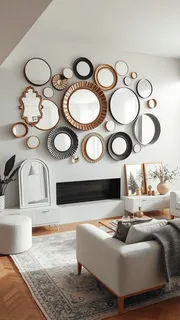
The living room is one of the best places to use a decorative mirror. A large mirror above a sofa or fireplace can become the focal point of the entire room.
When placing a mirror above a sofa, its size should be proportional to the furniture. A mirror that is too small may look disconnected, while an oversized mirror can dominate the space.
A decorative mirror can also be placed above a console table. It can be combined with a lamp, vase, books, plants, or other accessories to create a complete display.
Another option is to lean a large mirror against the wall. This creates a relaxed and contemporary appearance. However, the mirror should be positioned securely to prevent accidental movement or falling.
Decorative Mirrors in the Bedroom
Mirrors are highly useful in bedrooms. A full-length mirror can be placed near a wardrobe or dressing area, while a decorative mirror can be mounted above a dresser.
A large mirror above the bed can create a dramatic focal point, although it should be installed securely and positioned thoughtfully.
Smaller mirrors can also be used as part of a gallery wall. Combining mirrors with photographs and artwork can create a personalized display.
In a bedroom with limited natural light, placing a mirror where it can reflect a window or lamp can help make the room feel brighter.
Decorative Mirrors in the Bathroom
Bathrooms are one of the most obvious locations for mirrors because they are essential for everyday grooming. However, a bathroom mirror does not have to be purely functional.
A decorative frame can transform an ordinary bathroom into a more sophisticated space. Round mirrors can soften modern bathrooms, while rectangular mirrors can complement structured vanities.
Backlit mirrors can also provide additional illumination while creating a contemporary appearance.
When selecting a bathroom mirror, moisture resistance and appropriate materials should be considered. Frames and mounting hardware should be suitable for the humid environment.
Decorative Mirrors in the Entryway
The entryway provides an excellent opportunity to use a decorative mirror. It is one of the first areas visitors see, and a mirror can create an attractive first impression.
A mirror above an entryway console can provide a convenient place for a final appearance check before leaving the house. It can also reflect light and make the entrance appear larger.
The mirror can be paired with a small table lamp, decorative bowl, plant, artwork, or storage basket.
A round mirror can create a welcoming and relaxed appearance, while a rectangular mirror can produce a more formal arrangement.
Decorative Mirrors in the Dining Room
A decorative mirror can add elegance to a dining room. Large mirrors placed on walls opposite windows or attractive architectural features can reflect light and make the dining area feel more open.
A collection of small mirrors can also create a decorative feature wall.
When using mirrors in dining areas, homeowners should consider what the mirror reflects. A mirror facing an attractive centerpiece, artwork, or light fixture can enhance the room. A mirror reflecting clutter or an unattractive area may have the opposite effect.
Decorative Mirrors in Hallways
Hallways are often narrow and can lack natural light. Mirrors can help solve both problems visually.
A long horizontal mirror can make a hallway appear wider, while a vertical mirror can emphasize height.
Several small mirrors arranged along a hallway can create an interesting gallery effect. They can be combined with wall art, photographs, or small decorative shelves.
Choosing the Right Mirror Size
Size is one of the most important considerations when selecting a decorative mirror.
The mirror should generally be proportional to the wall and furniture around it. A large wall may require a large mirror or a collection of smaller mirrors.
For mirrors placed above furniture, the width of the mirror should relate to the width of the furniture. It does not always need to match exactly, but the proportions should look balanced.
Large mirrors can make powerful statement pieces, while smaller mirrors can work well as accent accessories.
Choosing the Right Shape
The shape of a mirror can influence the feeling of a room.
Round and oval mirrors introduce softness. Rectangular and square mirrors create structure. Irregular shapes add creativity and artistic interest.
Consider the existing shapes in the room. If most furniture has sharp corners, a round mirror can provide contrast. If the room already contains many curved elements, a geometric mirror may introduce useful structure.
Using Mirrors to Make Rooms Look Larger
One of the most valuable functions of decorative mirrors is creating the impression of additional space.
A large mirror can visually double the depth of a room by reflecting the opposite side. This can be particularly useful in small living rooms and narrow hallways.
Floor-to-ceiling mirrors can create an especially strong sense of spaciousness. Even smaller mirrors can make a difference when positioned strategically.
However, simply adding mirrors everywhere is not the answer. Too many reflections can make a room feel visually confusing. Thoughtful placement is more effective than quantity.
Using Mirrors to Improve Lighting
Mirrors can interact with natural and artificial light.
Placing a mirror opposite a window can reflect daylight into the room. This can make the space feel brighter and more open.
A mirror positioned near a lamp can also reflect its light. Decorative lighting fixtures can become even more visually interesting when reflected in a mirror.
The angle of the mirror matters. A poorly positioned mirror may reflect an unhelpful direction rather than the desired light source.
Creating a Mirror Gallery Wall
A mirror gallery wall is a creative alternative to using photographs or artwork alone.
Several mirrors of different shapes and sizes can be arranged together. The frames can either match for a coordinated appearance or vary for a more eclectic effect.
For a sophisticated gallery, homeowners might choose mirrors with similar frame colors but different shapes.
For a bohemian or artistic appearance, different frame materials, finishes, and shapes can be combined.
Before permanently installing the mirrors, it is useful to plan the arrangement carefully.
Combining Mirrors With Other Wall Décor
Mirrors do not have to stand alone. They can be combined with artwork, photographs, shelves, clocks, wall lights, and other accessories.
A mirror can serve as the central piece while smaller decorations surround it.
The key is to avoid overcrowding the wall. The mirror should remain visually important rather than becoming lost among too many competing accessories.
Decorative Mirrors and Interior Design Styles
Different mirror designs work better with different interior styles.
Minimalist Style
Minimalist interiors often benefit from simple frameless mirrors or mirrors with thin frames. Clean shapes and neutral finishes work well.
Modern Style
Modern interiors can accommodate geometric shapes, black frames, metallic finishes, and large statement mirrors.
Rustic Style
Rustic homes often benefit from wooden-framed mirrors with natural textures and earthy finishes.
Bohemian Style
Bohemian interiors can use mirrors with woven frames, unusual shapes, decorative details, and artistic designs.
Industrial Style
Black metal frames and simple geometric mirrors work well in industrial interiors.
Traditional Style
Ornate wooden or metallic frames can complement classic and traditional rooms.
Luxury Style
Gold, brass, bronze, marble-inspired, and richly detailed frames can add sophistication to luxury interiors.
Decorative Mirrors and Color
The frame color should complement the existing room palette.
Black frames can create strong contrast and work well with modern interiors. Gold and brass can add warmth and luxury. White frames can create a clean appearance, while wooden frames introduce natural tones.
A colorful frame can also be used as an accent. However, the color should connect with other elements in the room to avoid looking random.
Choosing a Mirror for a Small Room
Small rooms require careful consideration. A large mirror can actually be beneficial because it creates the impression of additional space.
A mirror placed opposite a window can make a compact room feel brighter. A wall-mounted mirror also avoids taking up floor space.
In small spaces, simple frames may be preferable because overly elaborate designs can make the room feel crowded.
Choosing Mirrors for Large Rooms
Large rooms can accommodate bigger and more dramatic mirrors.
A large statement mirror can fill an empty wall and create a strong focal point. Multiple mirrors can also be grouped together.
When decorating a large wall, scale is particularly important. Several small accessories may look lost, whereas a substantial mirror can provide the visual weight necessary to balance the space.
Decorative Mirrors as Statement Pieces
Some mirrors are designed to attract attention immediately. These statement mirrors may feature oversized frames, unusual shapes, intricate craftsmanship, or distinctive materials.
A statement mirror can become the centerpiece of a room, reducing the need for many other decorative accessories.
When using a statement mirror, it is often best to keep surrounding décor relatively simple. This allows the mirror to remain the star of the space.
Full-Length Decorative Mirrors
Full-length mirrors are useful in bedrooms, dressing rooms, entryways, and hallways.
They can be mounted to walls or designed as freestanding pieces. A decorative frame can turn a practical full-length mirror into an attractive furniture accessory.
For small rooms, a full-length mirror can also create a strong sense of height and openness.
Decorative Mirrors and Furniture
Mirrors can complement furniture in several ways.
A mirror above a console table can create a balanced arrangement. A mirror above a dresser can reinforce the furniture’s visual importance. A mirror behind a dining table can create depth.
Mirrors can also be paired with furniture made from similar materials. For example, a wooden-framed mirror can complement a wooden console, while a brass-framed mirror can coordinate with metallic furniture details.
Maintenance and Cleaning
Proper maintenance helps decorative mirrors retain their appearance.
Glass surfaces should be cleaned regularly to remove fingerprints, dust, and smudges. A suitable glass-cleaning method and soft cloth can help maintain clarity.
The frame should also be cleaned according to its material. Wooden frames may require gentle dusting, while metal frames may need products appropriate to their finish.
Harsh chemicals should be avoided when they could damage the frame or mirror backing.
It is also important to check mounting hardware occasionally to ensure that the mirror remains secure.
Mirror Safety
Safety is particularly important with large or heavy decorative mirrors.
Mirrors should be installed using suitable mounting hardware appropriate for their weight and wall type. Large mirrors should not be mounted casually or with inadequate fixtures.
In homes with children and pets, mirrors should be positioned securely and carefully.
Floor-leaning mirrors should also be stabilized to prevent tipping.
For bathroom and high-moisture areas, appropriate materials and mounting methods should be used.
Buying Decorative Mirrors on a Budget
Decorative mirrors are available at many different price points. Homeowners do not necessarily need to spend a large amount of money to achieve an attractive result.
Affordable mirrors with simple frames can look elegant when placed thoughtfully. A basic mirror can also be upgraded visually by pairing it with attractive surrounding accessories.
Second-hand stores, craft markets, local artisans, and home décor retailers can provide interesting choices.
Instead of purchasing several inexpensive mirrors, it may be more effective to invest in one distinctive piece that becomes the focal point of a room.
Handmade Decorative Mirrors
Handmade mirrors can add uniqueness and craftsmanship to a home.
Artisans may use carved wood, woven fibers, metalwork, recycled materials, or hand-painted details to create distinctive frames.
Because handmade pieces may contain small variations, they can feel more personal than mass-produced products.
A handmade mirror can also serve as a conversation piece and help establish an individual design identity.
Sustainable Decorative Mirrors
Sustainability is becoming increasingly important in home decoration. Homeowners may look for mirrors made with responsibly sourced materials, recycled components, or durable construction.
Choosing a timeless mirror that can remain attractive for many years can also be more sustainable than frequently replacing trendy accessories.
Upcycling old mirrors is another possibility. An existing mirror can sometimes be given a new frame, refinished, painted, or incorporated into a new design.
Seasonal Decorating With Mirrors
Mirrors are generally timeless accessories, but their surroundings can be changed according to the season.
During the holiday season, a mirror can be surrounded by greenery, lights, wreaths, or other festive decorations.
In spring, fresh flowers and light-colored accessories can create a brighter appearance.
During autumn, warm-toned accessories such as dried leaves, branches, and earthy decorations can complement the mirror.
This makes mirrors useful year-round without requiring the mirror itself to be replaced.
Common Decorative Mirror Mistakes
One common mistake is placing a mirror where it reflects an unattractive area. Because mirrors reflect whatever is in front of them, placement should always be considered carefully.
Another mistake is using a mirror that is too small for the wall or furniture. The mirror may appear disconnected from the rest of the room.
Poor installation is another concern. A mirror should always be securely mounted or stabilized.
Using too many mirrors can also create excessive visual stimulation. Mirrors should be used strategically rather than simply filling every available wall.
Finally, homeowners sometimes choose a mirror solely because they like its appearance without considering whether its style complements the rest of the room. The best decorative mirror is one that works with the entire interior.
How to Create a Balanced Mirror Display
Balance is essential when using decorative mirrors.
A large mirror can be balanced by furniture beneath it or by smaller decorative objects around it. In a gallery wall, different shapes and sizes should be distributed thoughtfully.
Symmetrical arrangements create a formal appearance. Asymmetrical arrangements can feel more relaxed and artistic.
The amount of empty wall space around the mirror should also be considered. Giving the mirror room to breathe can make it more visually powerful.
Decorative Mirrors and Personal Style
A home should reflect the personality of the people who live there. Decorative mirrors provide an opportunity to express that personality.
Someone who prefers minimalist décor may choose a simple round mirror. Someone who enjoys traditional design may prefer an ornate frame. A person with an artistic style may select an unusual geometric or sculptural mirror.
There is no single correct style. The best choice depends on personal preference and the atmosphere the homeowner wants to create.
The Role of Mirrors in Modern Interior Design
Modern interior design increasingly focuses on flexibility, natural light, multifunctional spaces, and visually appealing accessories. Decorative mirrors fit naturally into these trends.
They can make compact spaces feel larger, increase perceived brightness, and serve as both functional objects and artwork.
The popularity of unique shapes, natural materials, metallic finishes, and handcrafted products has also expanded the range of decorative mirrors available to homeowners.
Modern mirrors can therefore be practical, artistic, and highly personalized.
Conclusion
Decorative mirrors are among the most effective accessories for improving the appearance and atmosphere of a home. They can make spaces appear larger, reflect natural and artificial light, fill empty walls, create focal points, and introduce style and personality.
With options ranging from simple frameless designs to elaborate statement pieces, there is a decorative mirror suitable for almost every interior. Round mirrors can soften a space, rectangular mirrors can add structure, geometric mirrors can create an artistic effect, and full-length mirrors can combine practicality with visual appeal.
The right mirror should be selected according to the size of the room, the surrounding furniture, the existing color palette, the interior design style, and the desired function. Placement is equally important because the mirror’s reflection can influence the appearance of the entire room.
Decorative mirrors can be particularly valuable in small or dark spaces. By reflecting light and creating visual depth, they can make a room feel more open and inviting. In larger spaces, oversized or statement mirrors can provide the scale and visual interest needed to balance the room.
They can also be combined with other home accessories such as decorative bowls, plants, lamps, artwork, photographs, books, and vases. These combinations can create attractive displays that feel personal and carefully considered.
Ultimately, decorative mirrors demonstrate how a relatively simple home accessory can have a significant impact on interior design. They combine function and beauty in a way that few other accessories can match. Whether used as a subtle accent or as the centerpiece of an entire room, a well-chosen decorative mirror can add depth, light, elegance, and character to a home.
For homeowners looking for an easy way to refresh their interiors, decorative mirrors offer an excellent solution. With thoughtful placement, appropriate sizing, and a style that complements the surrounding décor, a mirror can turn an ordinary wall into an attractive feature and help create a home that feels brighter, larger, more stylish, and more inviting.
For more info check out our main website here http://ezhomeaura.com